THE 2026 SPECIES
The Global Center for Species Survival at the Indianapolis Zoo worked with our worldwide network of conservation partners to identify this year’s group of vertebrates, invertebrates, plants and fungi in the inaugural Uproar Conservation Challenge, presented by T-Fiber. Scroll down for the full list, and learn more about why these species are important to the health of their ecosystems and the threats to their survival.
Established in 1964, the IUCN Red List of Threatened Species is the world’s most comprehensive source on the vulnerability of animals, plants and fungi to extinction. This vital tool tracks biodiversity and guides conservation action, providing data on species’ populations, habitats, threats and the steps needed to protect them.
Fungi
Invertebrate
Plant
Vertebrate
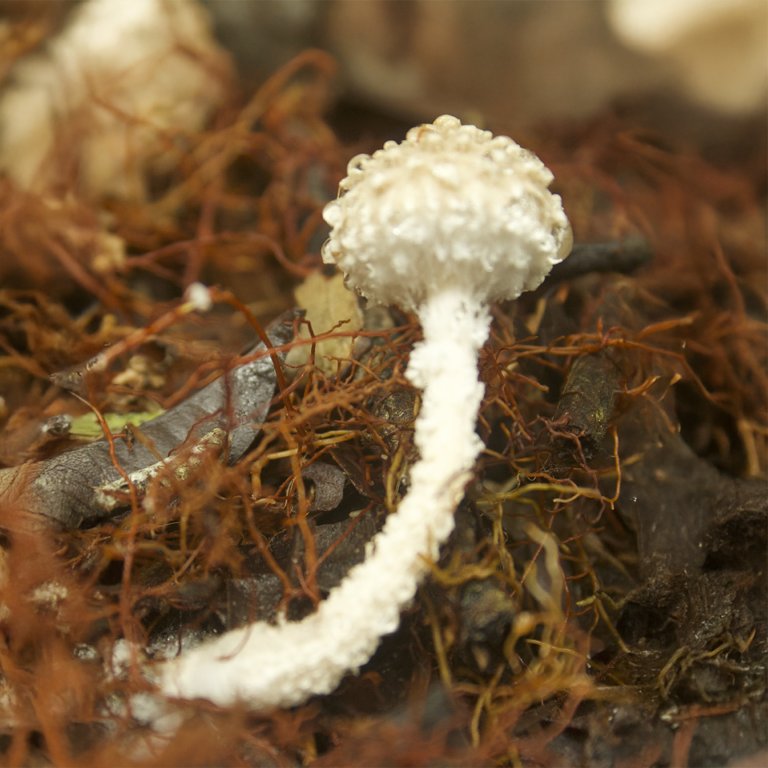
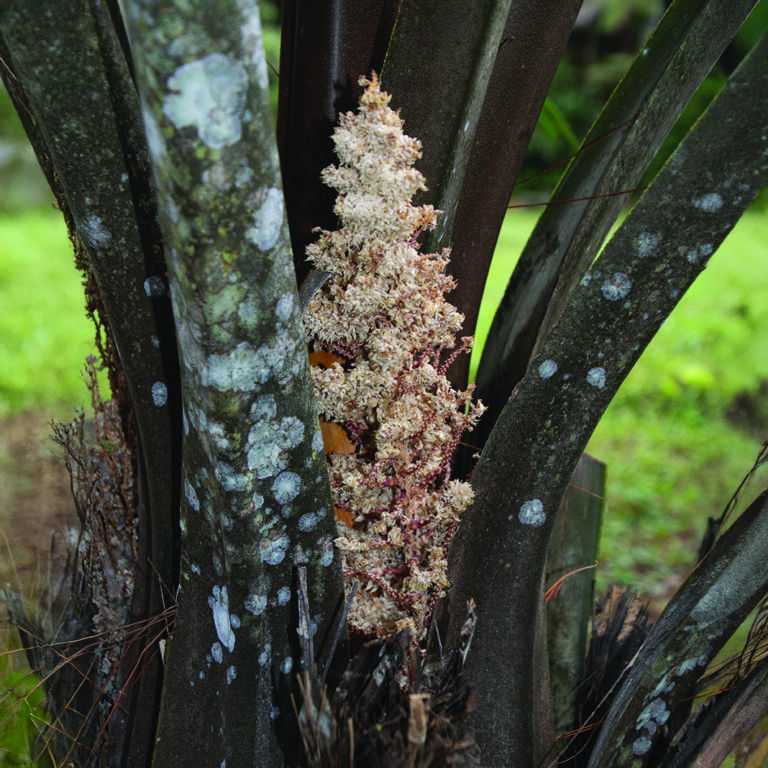
QUICK FACT: Has only ever been seen at three locations in the Colombian Amazon.
THREATS: Illegal mining, plantations, and forest clearing threaten its host tree, causing habitat loss.
IMPORTANCE: It supports, and only grows with, its host tree, which itself is a rare tree endemic to Colombia.
Photo credit: Aída Vasco-Palacios
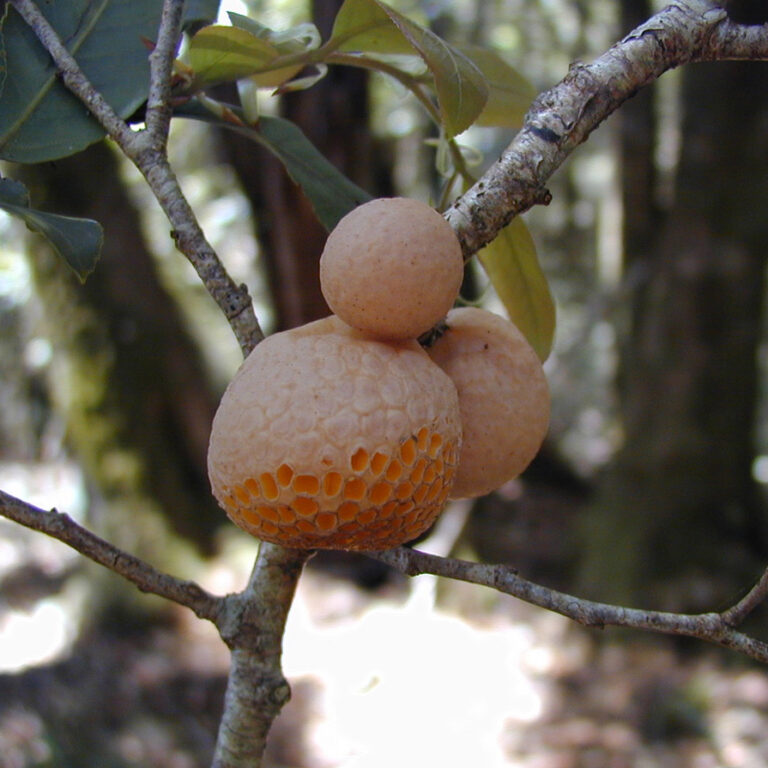
QUICK FACT: Related fungi are eaten regionally; this one is small and easily overlooked.
THREATS: Wildfires and destruction of its Nothofagus host trees reduce its habitat.
IMPORTANCE: It influences host dynamics and provides food and microhabitat for local animals and insects.
Photo credit: Tony Young
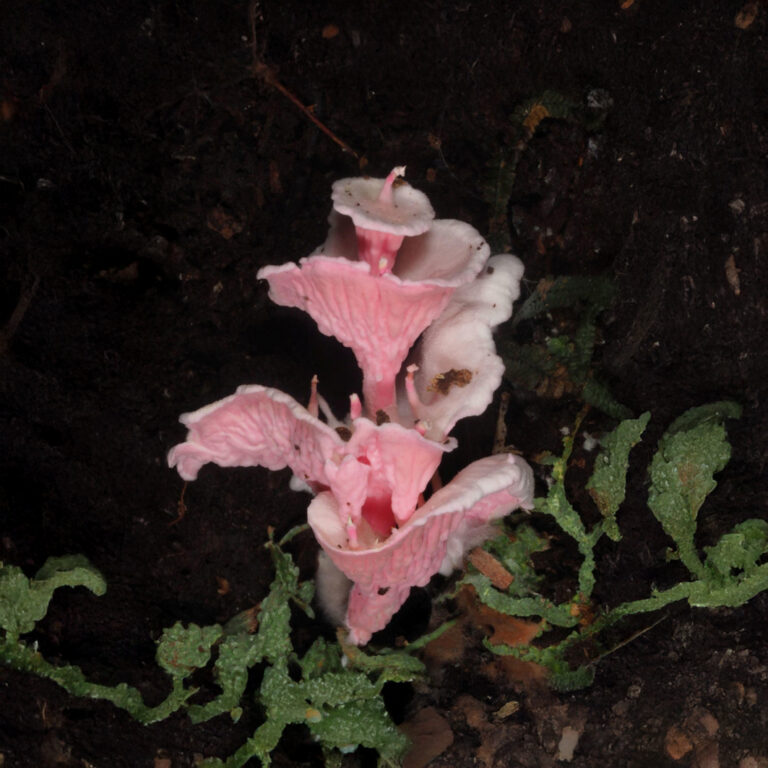
QUICK FACT: Only 11 of these mushrooms have ever been found.
THREATS: Forest clearing, agriculture, fire, and invasive species threaten the few known sites where it occurs.
IMPORTANCE: Only grows with an endemic New Caledonian tree; its exact ecological role is still being studied.
Photo credit: Christian Laudereau
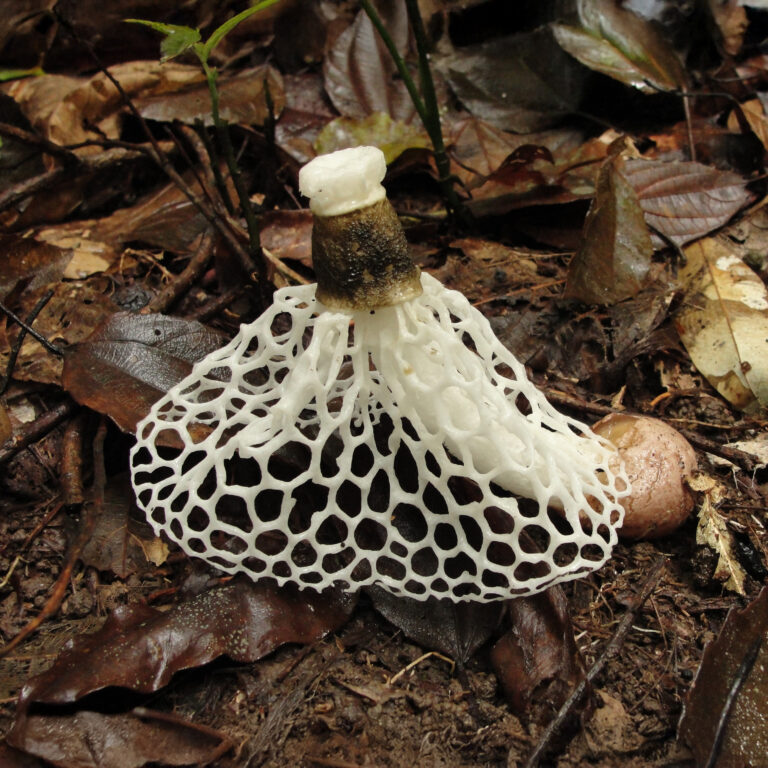
QUICK FACT: It uses a powerful odor to lure insects that spread its spores.
THREATS: Habitat loss from development, industry, forestry, and invasive species eliminate the sites where it occurs.
IMPORTANCE: A decomposer that breaks down leaf litter and mulch, it returns nutrients to the soil.
Photo credit: J.M. Baltazar
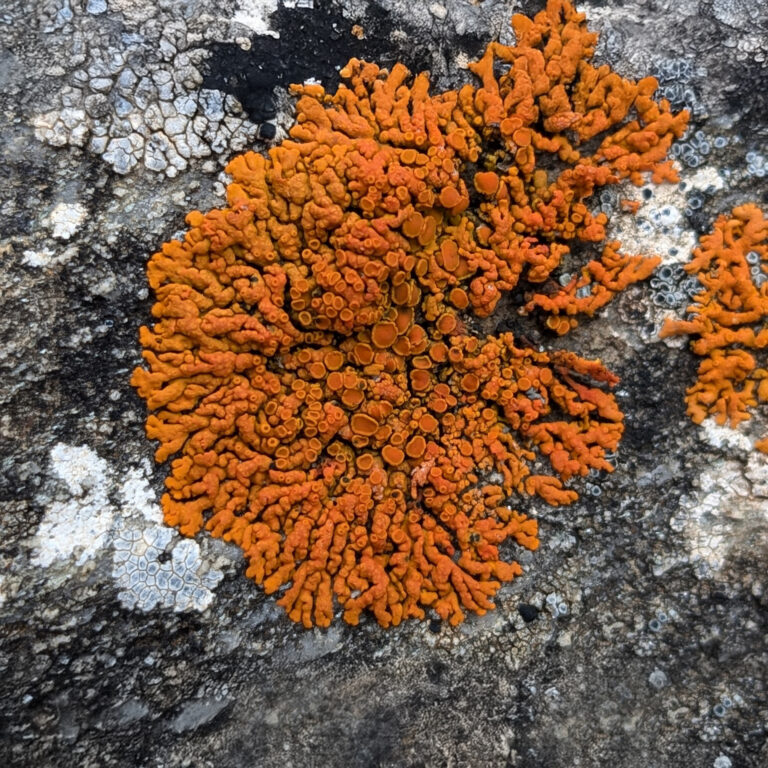
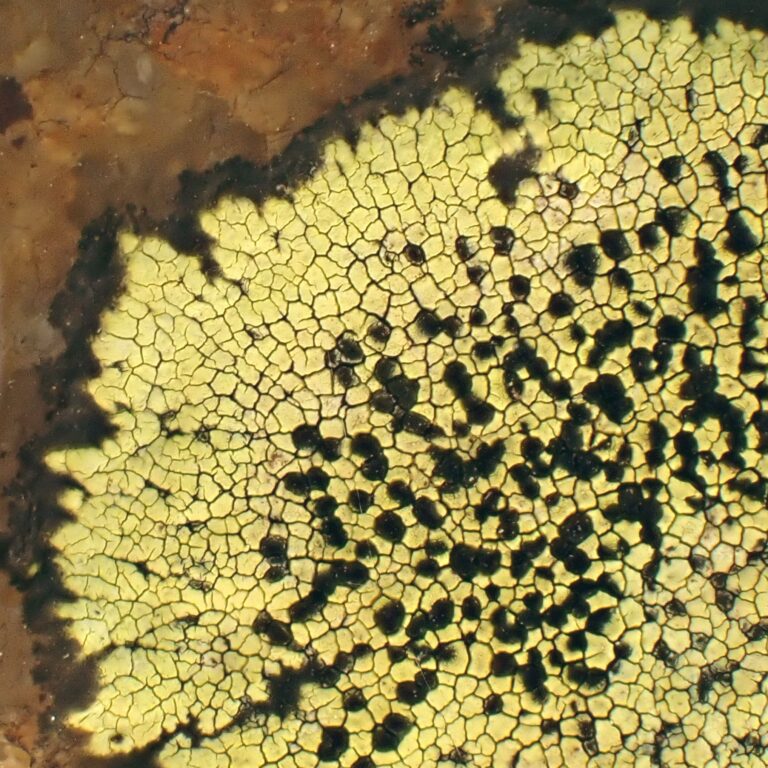
QUICK FACT: Dormant samples survived in space for roughly 18 months.
THREATS: Often thrives in nitrogen rich environments; more a pollution “winner” than a typical casualty.
IMPORTANCE: It is a vivid, adaptable lichen used to study how species adjust to very different habitats.
Photo credit: Rebecca Yahr
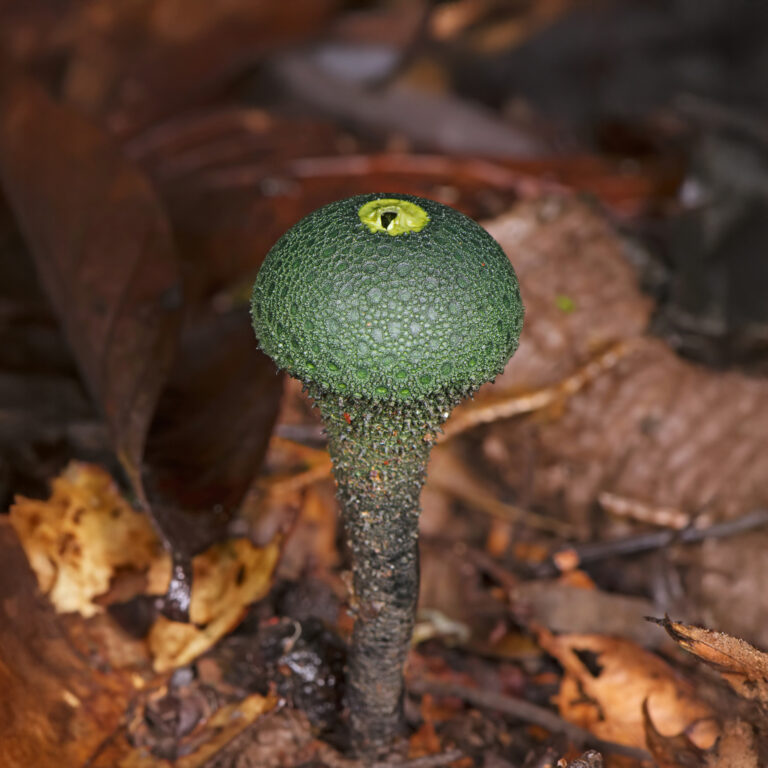
QUICK FACT: It is the only known species in the genus Chlorogaster.
THREATS: Forest loss from palm oil and pulpwood plantations reduces the habitat it depends on.
IMPORTANCE: It is a mycorrhizal partner that helps trees absorb water and nutrients more efficiently.
Photo credit: Joe Kai Russell
QUICK FACT: It was discovered through a multi-expert collaboration and the luck of picking up the perfect stick.
THREATS: It is likely vulnerable to the general freshwater pressures: pollution, altered flows, invasive species, and climate change.
IMPORTANCE: It helps “clean” waterways by breaking down organic matter and compounds; supports food webs.
Photo credit: Huzefa Raja
QUICK FACT: Dormant samples have survived trips to space for about two weeks.
THREATS: Generally hardy, but it is sensitive to places with heavy nitrogen pollution.
IMPORTANCE: A tough pioneer on silica-rich rocks, it helps scientists study survival in extreme environments.
Photo credit: Rebecca Yahr
QUICK FACT: It grows only after snowmelt, often on debarked dead wood at high elevations.
THREATS: Warming winters and reduced snowpack threaten the brief melt window it needs to appear.
IMPORTANCE: It is a high-alpine decomposer that cycles nutrients and helps regulate microbial communities.
Photo credit: Alain Michaud
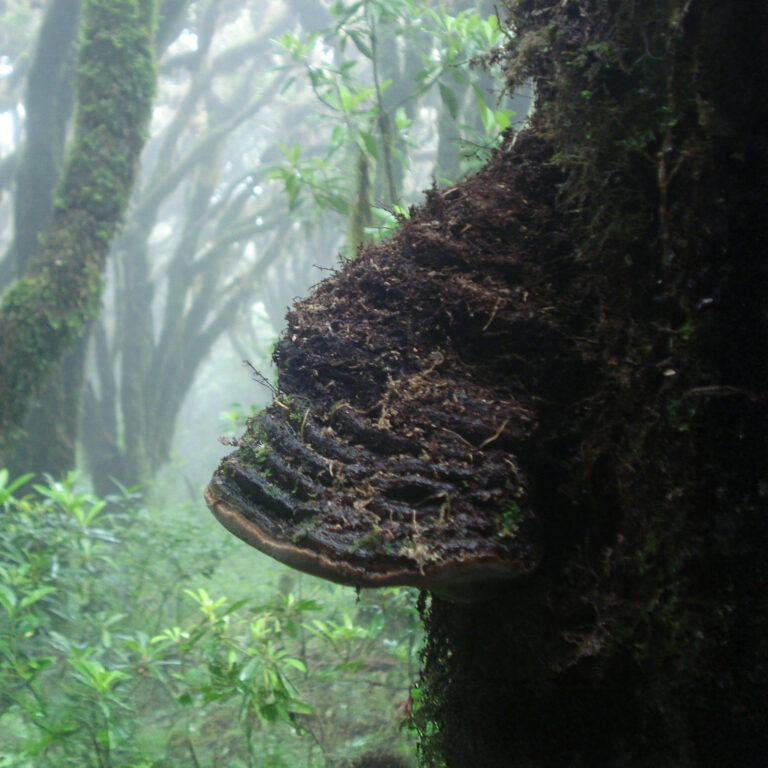
QUICK FACT: This host tree is called “tapir’s bark” because tapirs rub the trunk and occasionally bite it, attracted by the bark’s medicinal properties.
THREATS: Climate change plus fire, grazing, invasive species, and land-use change are shrinking cloud forests where it grows.
IMPORTANCE: It is a wood-decayer that helps recycle nutrients in rare Brazilian cloud forest habitats.
Photo credit: Genivaldo Alves-Silva
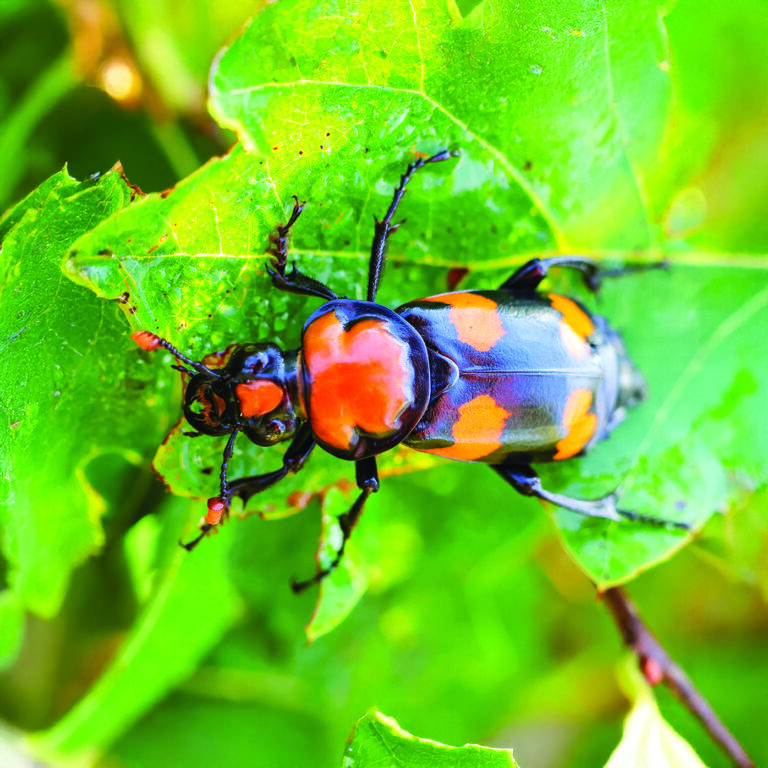
QUICK FACT: Parents raise young on buried carrion, showing rare and complex insect caregiving.
THREATS: Habitat loss, shifting carrion availability, pesticides, and climate and land-use change pressures.
IMPORTANCE: An ecosystem engineer that buries carcasses, returns nutrients to soil, and helps limit disease spread.
Photo credit: Roger Williams Park Zoo
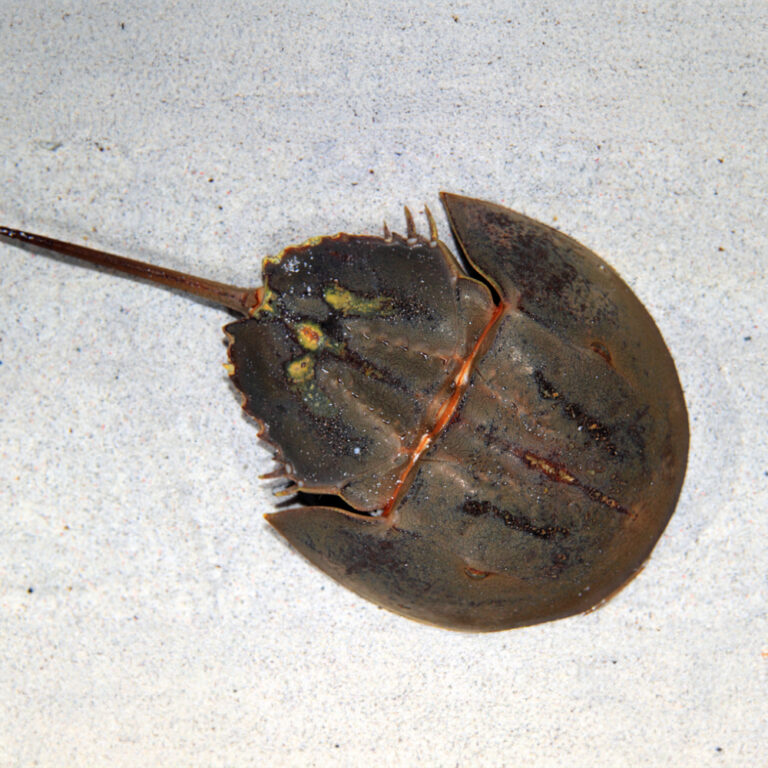
QUICK FACT: A living fossil with a lineage around 445 million years old.
THREATS: Harvest for bait and blood extraction, habitat loss, and sea-level rise.
IMPORTANCE: Eggs fuel migrating shorebirds; adults are important predators in nearshore food webs.
Photo credit: Mark Botton
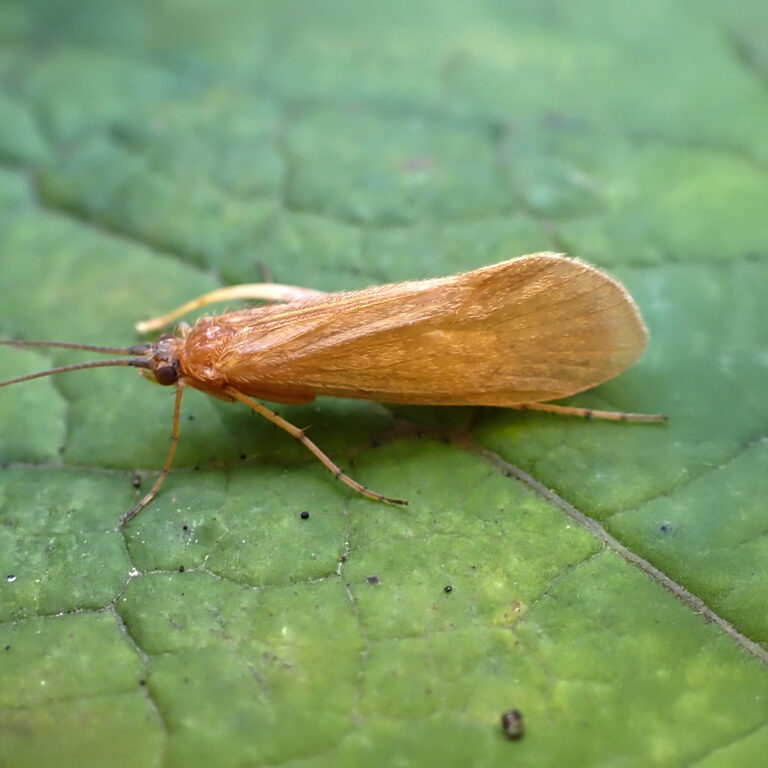
QUICK FACT: Named after the comic strip hero, Asterix the Gaul, with two other species of caddisfly named after Obelix and Idefix, respectively, at the same time!
THREATS: Water abstraction and damage to spring habitats reduce the clean flows it requires.
IMPORTANCE: Caddisflies support fish and birds, signal water quality, and process organic material in streams.
Photo credit: Graf Schmidt-Kloiber
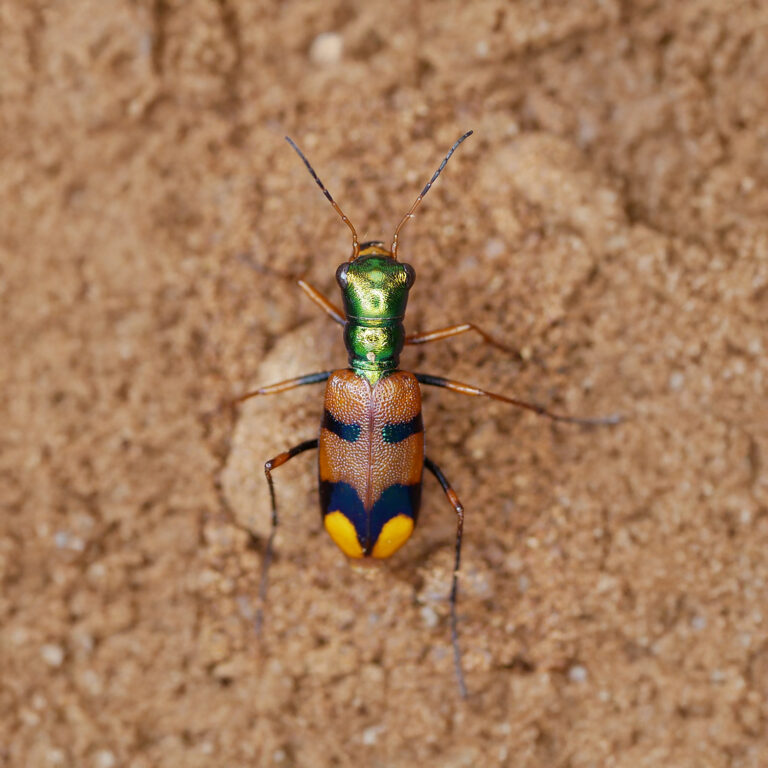
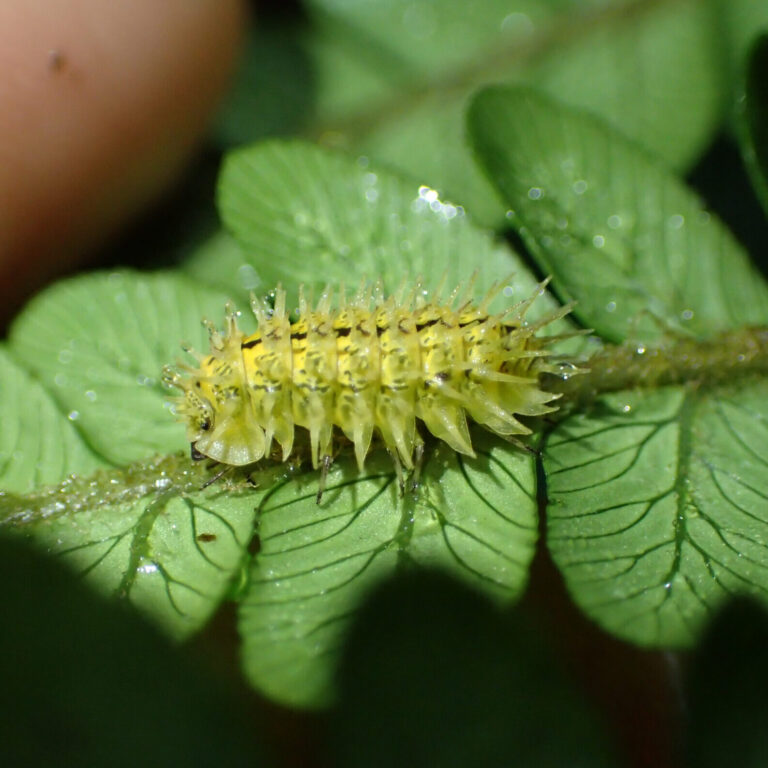
QUICK FACT: Possibly the slowest South American tiger beetle; rarely flies.
THREATS: Agriculture expansion, habitat loss, fire, and climate change impacts.
IMPORTANCE: A predator and a flagship for local habitat conservation and school outreach efforts.
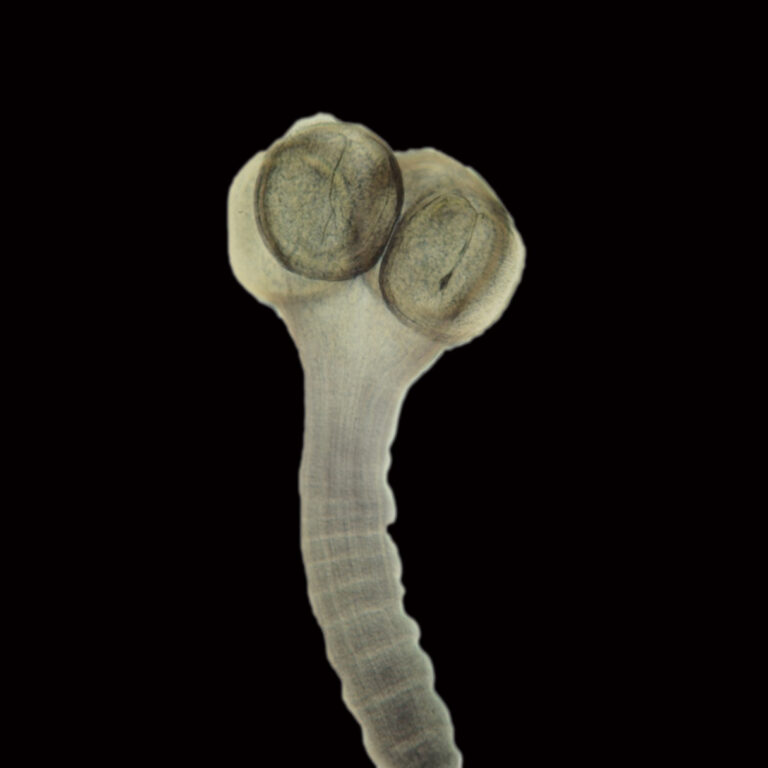
QUICK FACT: Its fate is tightly linked to the survival of Tasmanian devils.
THREATS: Decline of Tasmanian devils from devil facial tumour disease (DFTD) caused by an infectious cancer.
IMPORTANCE: Likely bioaccumulates heavy metals in its host to keep Tasmanian devils safe from heavy metal toxicity.
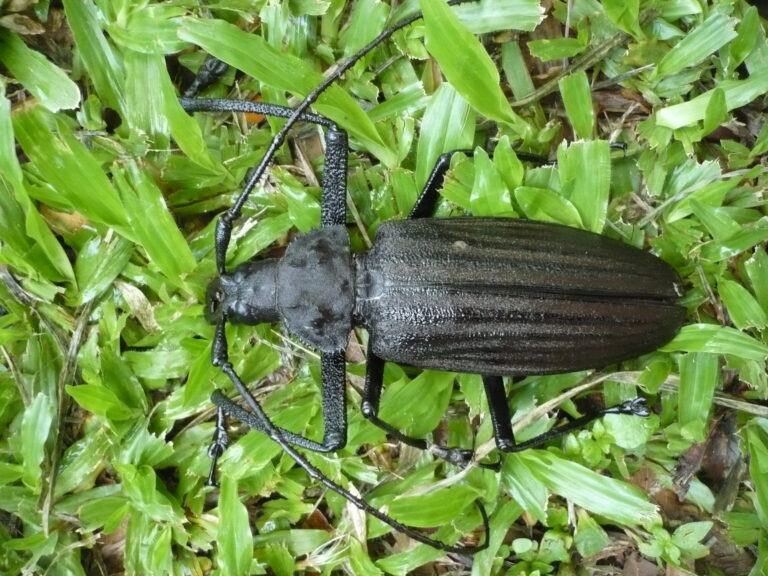
QUICK FACT: Its mandibles are strong enough to bite a pencil in half.
THREATS: Logging, forest conversion, cyclones, fear-killing when found near lights or houses, and collector trade pressure.
IMPORTANCE: A major dead-wood decomposer, returning nutrients and creating habitat for other species.
Photo credit: Hilda Waqa
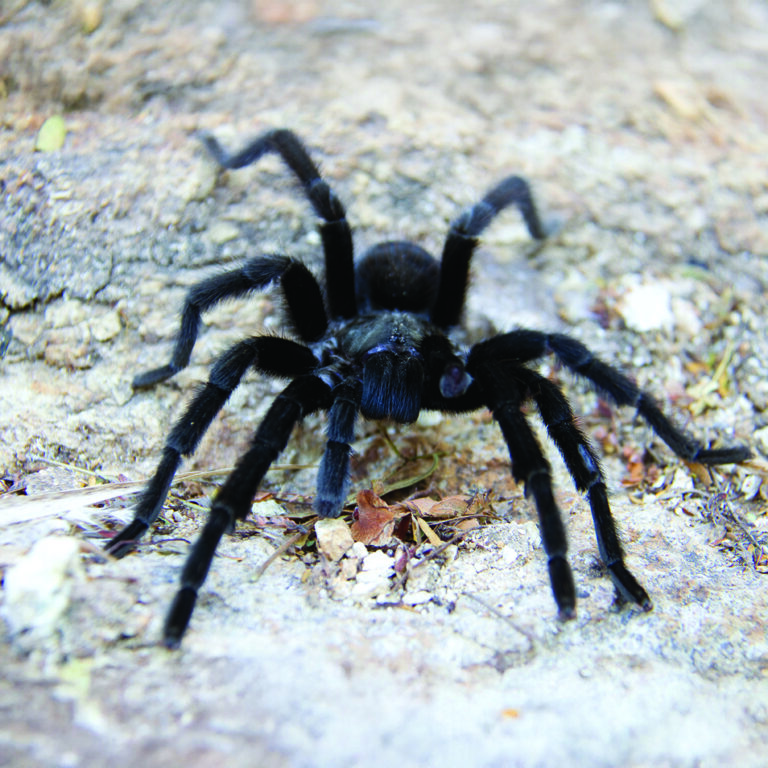
QUICK FACT: This tarantula (aka, Mexican black velvet tarantula) is part of the indigenous cultural worldview of many Zapotec peoples, but sadly their populations are drastically declining.
THREATS: Habitat loss, fragmentation, road mortality, and illegal trafficking.
IMPORTANCE: A top invertebrate predator and burrow-builder that can shape local soil microhabitats.
Photo credit: Ivan Montes de Oca Cacheux/CONABIO
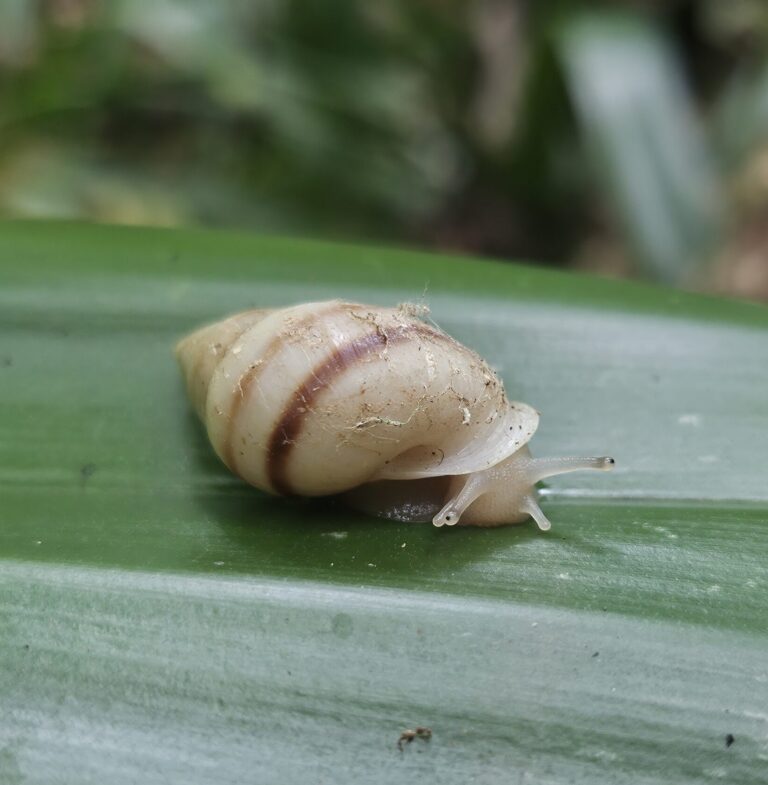
QUICK FACT: A comeback story! Once extinct in the wild, now breeding again in nature.
THREATS: Invasive rosy wolfsnails devastated wild populations; recovery depends on continued protection.
IMPORTANCE: Supports island food webs and carries deep cultural meaning across Polynesian islands.
Photo credit: Zoological Society of London
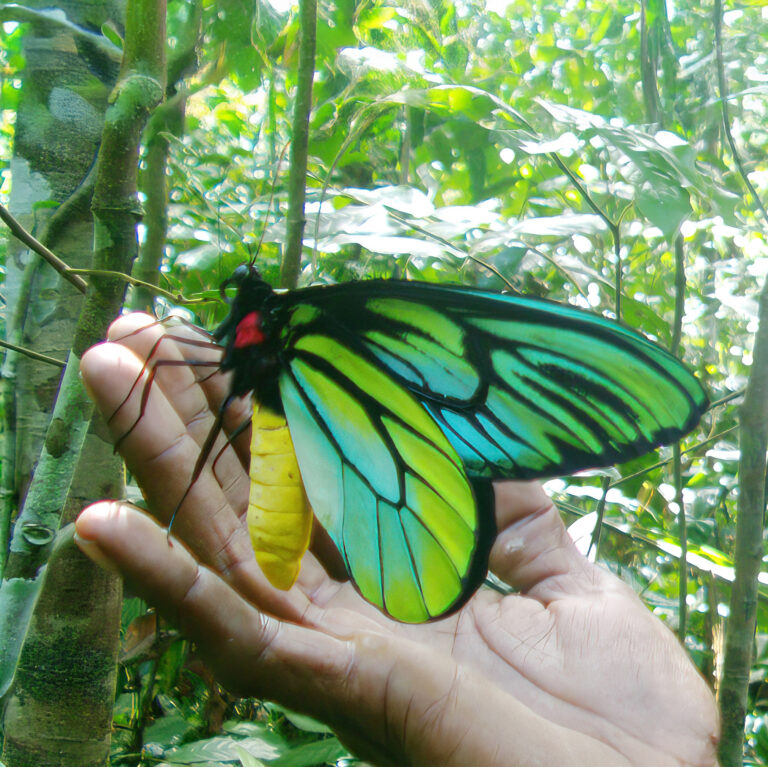
QUICK FACT: The world’s largest butterfly, spanning up to 28 cm (11 inches).
THREATS: Forest loss to timber and plantations, plus volcanic events that can erase habitat quickly.
IMPORTANCE: Pollinator, especially of native pipevines; sentinel for habitat health; high-profile flagship species for conservation in its country.
Photo credit: Charles Harbottle
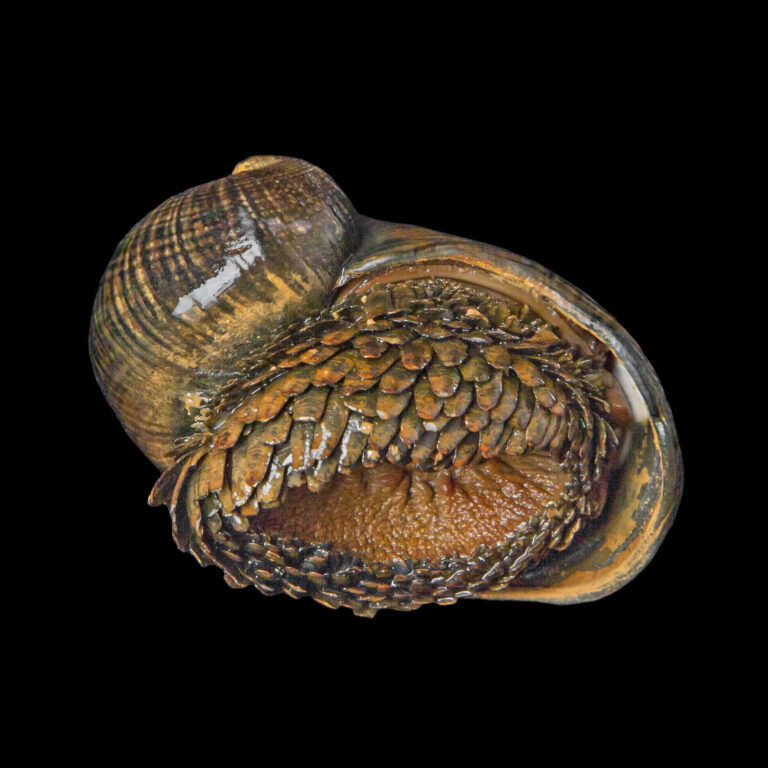
QUICK FACT: The only animal that integrates iron into its shell and “scales.”
THREATS: Deep-sea mining threatens hydrothermal vent habitats.
IMPORTANCE: A unique vent species that helps scientists understand life in extreme deep-ocean ecosystems.
Photo credit: Dr. Chong Chen
QUICK FACT: Glows in the dark under UV light.
THREATS: Invasive plants degrade cloud forest habitat; plant disease reduces the flora it depends on.
IMPORTANCE: Helps break down organic matter and cycle nutrients in St. Helena’s cloud forests.
Photo credit: Liza Fowler
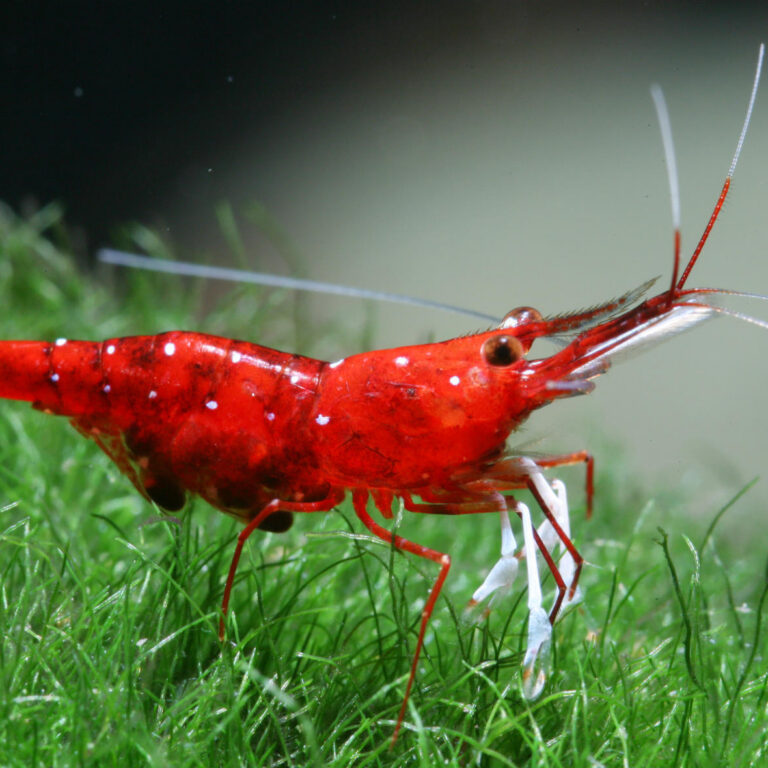
QUICK FACT: A vivid red shrimp found in the unique, ancient Malili lake system, an evolutionary laboratory!
THREATS: Invasive species, pollution, and collection for the aquarium trade.
IMPORTANCE: Recycles nutrients and supports the base of the food web in ancient lake ecosystems.
Photo credit: Dirk Blankenhaus
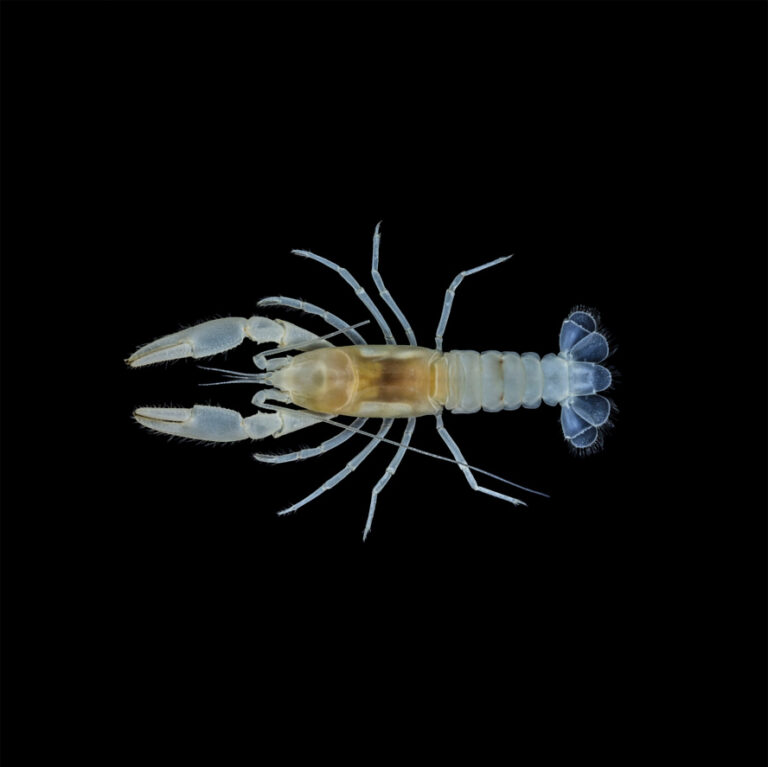
QUICK FACT: Named for a certain classic rock anthem. Does not answer to “Free Bird!”
THREATS: Pollution, habitat modification, and small, fragmented cave populations under pressure.
IMPORTANCE: A keystone cave aquifer species; its health reflects the health of underground waters.
Photo credit: Guenter Shuster
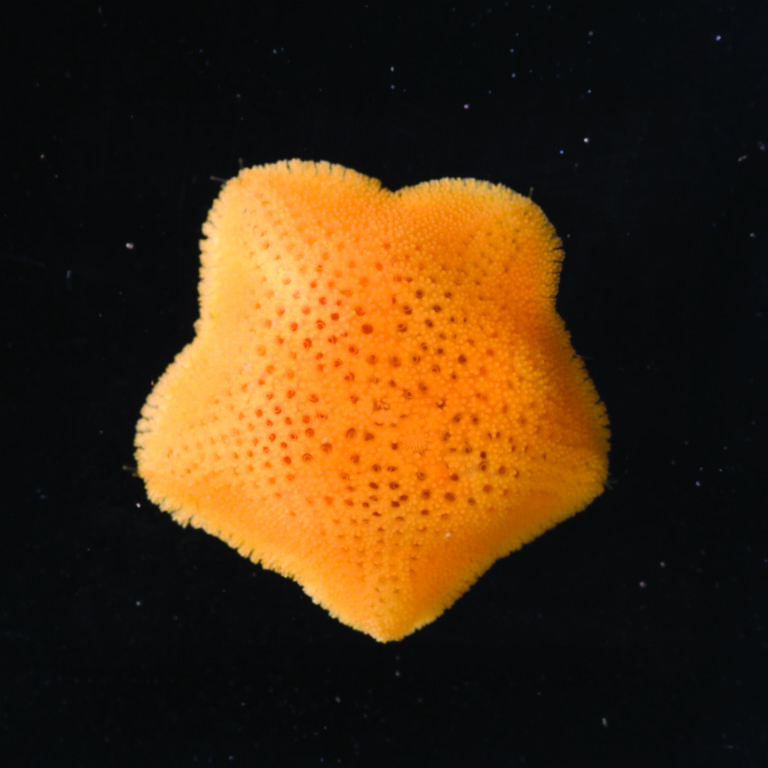
QUICK FACT: One of the few sea stars that gives birth to live young.
THREATS: Coastal development and pollution in its limited shoreline habitat.
IMPORTANCE: A rare endemic that reflects nearshore ecosystem health in a narrow range.
Photo credit: Maria Byrne
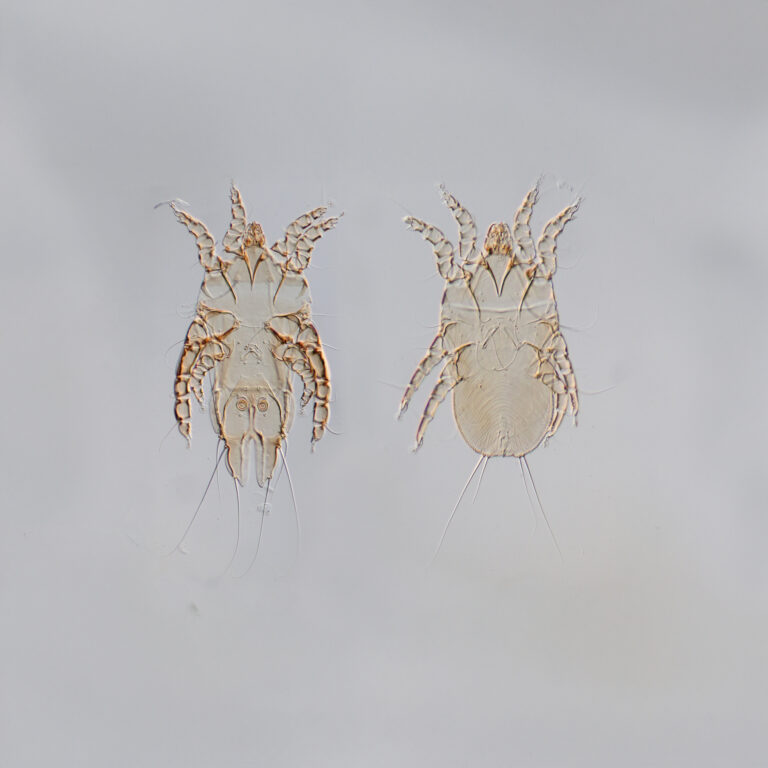
QUICK FACT: Likely helpful to its host, feeding on oils, mold, and microbes rather than blood or skin.
THREATS: Declines as its endangered host bird faces habitat loss and feral cat predation.
IMPORTANCE: A powerful lesson in “co-extinction” when one species falls, its symbionts can vanish, too.
photo: Professor Tsukasa Waki/Toho University
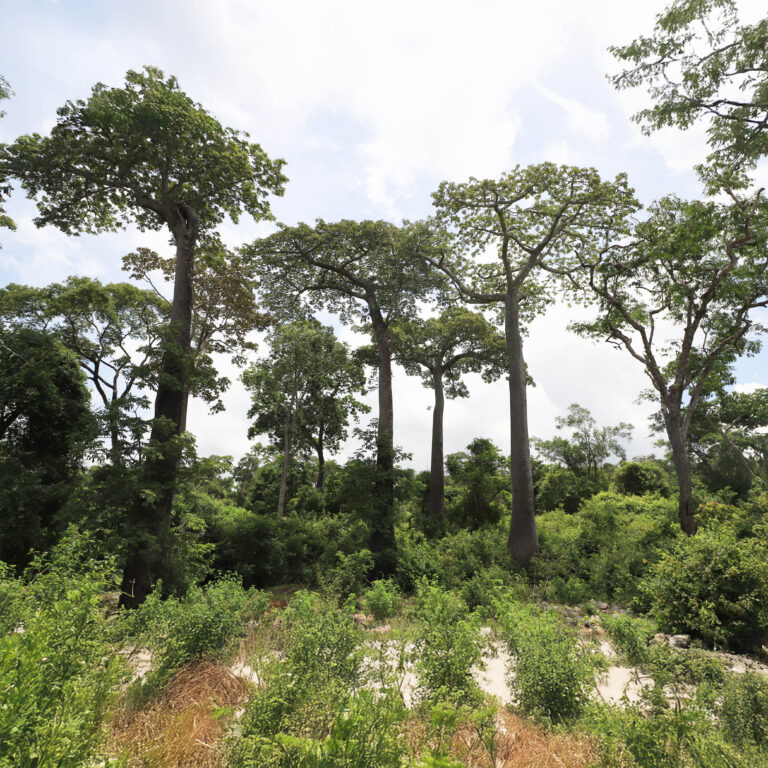
QUICK FACT: A rare yellow-flowered baobab that typically blooms in Nov-Dec.
THREATS: Ongoing pressures across a small northern Madagascar range despite recent conservation gains.
IMPORTANCE: A keystone baobab that shapes dry forests and provides shelter and microhabitats for wildlife.
Photo Credit: Johary Andrianjatovo
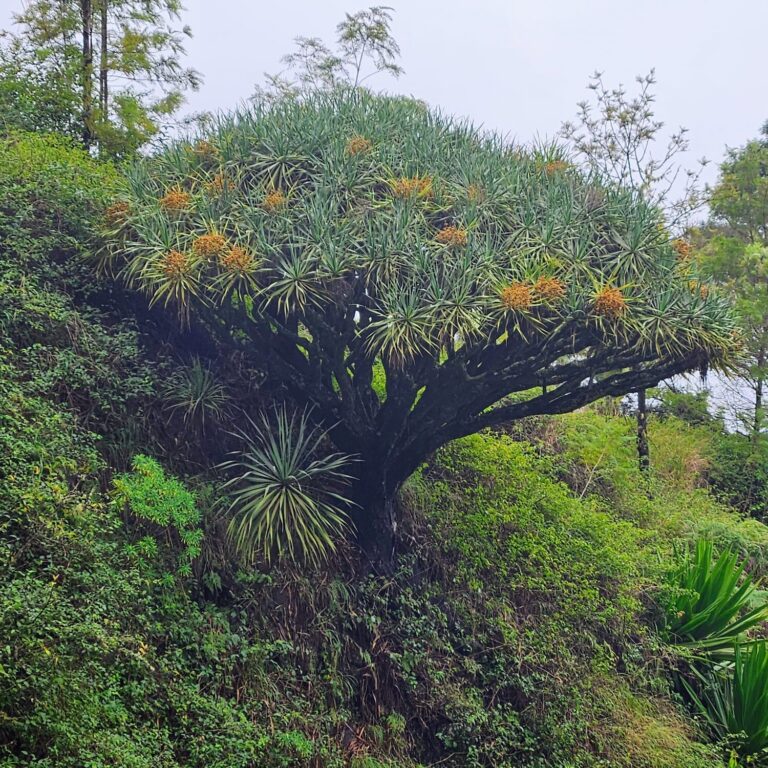
QUICK FACT: When cut, it oozes a deep crimson resin or “dragon’s blood” from its bark, which is used in traditional medicine and dyes.
THREATS: Small endemic range and pressure from changing landscapes and associated habitat shifts.
IMPORTANCE: Provides food and habitat in novel ecosystems where it now persists.
Photo credit: Joachim Gratzfeld
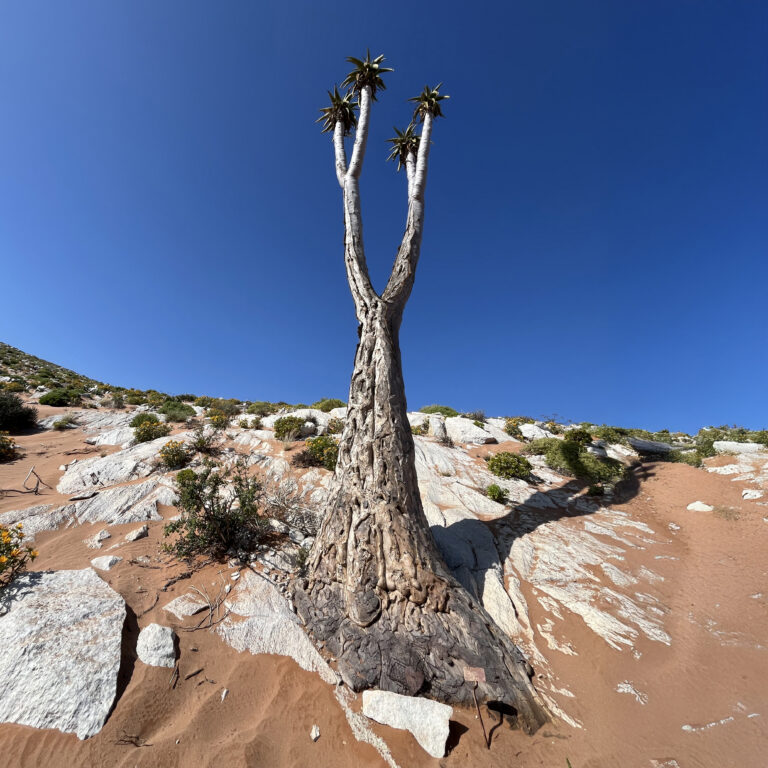
QUICK FACT: Can live for centuries and grows so slowly that changes may take decades to notice.
THREATS: Prolonged drought and intensifying aridity driven by climate change.
IMPORTANCE: Provides shelter, nectar, and moisture in desert landscapes; signals ecosystem stress.
Photo credit: Oscar Maeyer
QUICK FACT: So well camouflaged, it’s easy to miss, making it vulnerable to damage and poaching.
THREATS: Illegal collection is the top threat, amplified by demand for rare wild-collected specimens.
IMPORTANCE: Supports pollinators and seed dispersers, creates microhabitats, and signals stable soil conditions.
Photo credit: Emiliano Sanchez Martinez
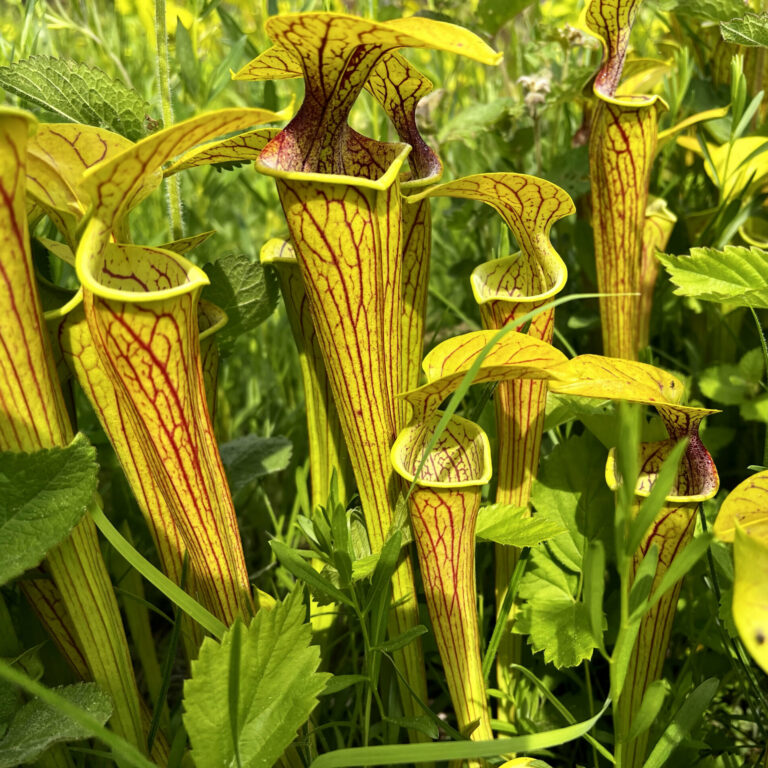
QUICK FACT: A carnivorous plant that traps and digests insects for nutrients.
THREATS: Habitat loss, poaching, and disrupted fire regimes in bog and seep ecosystems.
IMPORTANCE: Creates micro-ecosystems inside its pitchers and signals healthy bog/seep habitats.
Photo credit: Carson Trexler
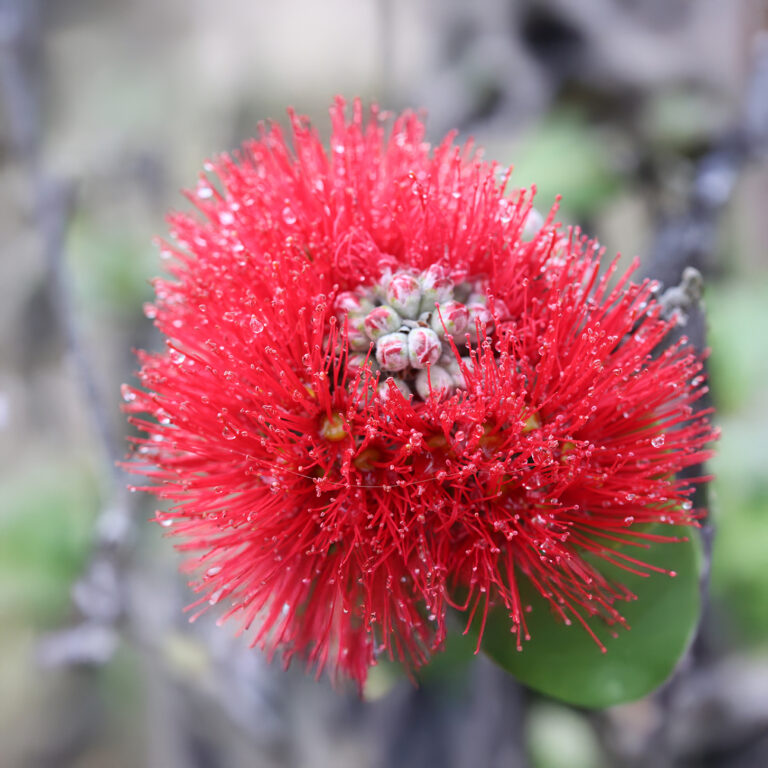
QUICK FACT: First to colonize new lava; deeply important in Hawaiian culture and ecology.
THREATS: Fire, invasive species, and introduced diseases driving ecosystem decline.
IMPORTANCE: A keystone Hawaiian tree spanning sea level to 2,500 m, dominant in many forest types.
Photo credit: Jeffery Stallman
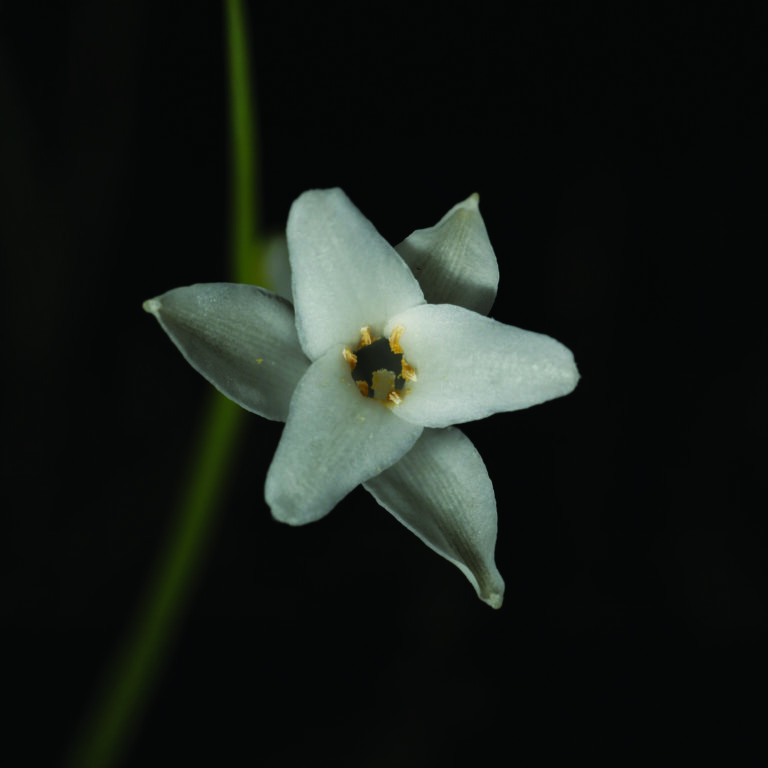
QUICK FACT: Solved a fossil mystery! Live plant pollen matched unknown samples from ancient cores.
THREATS: Invasives, disease, tiny population, severe storms; extinct in the wild but maintained in cultivation.
IMPORTANCE: A culturally significant plant tied to Hawaiian identity and a remarkable rediscovery of a new genus.
Photo credit: Jamie Bruch/KIRC
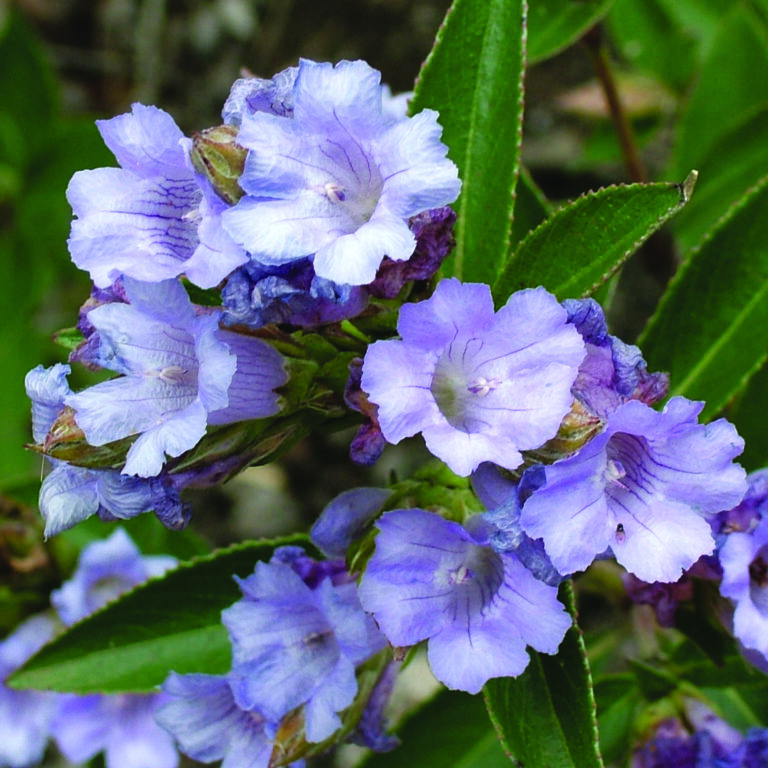
QUICK FACT: Its large, attractive flowers are locally collected and strung together in garlands for adorning hair by local women.
THREATS: Infrastructure expansion, quarrying, and land-use change in a limited habitat.
IMPORTANCE: Supports pollinators in specialized local ecosystems.
Photo credit: Ashok Captain
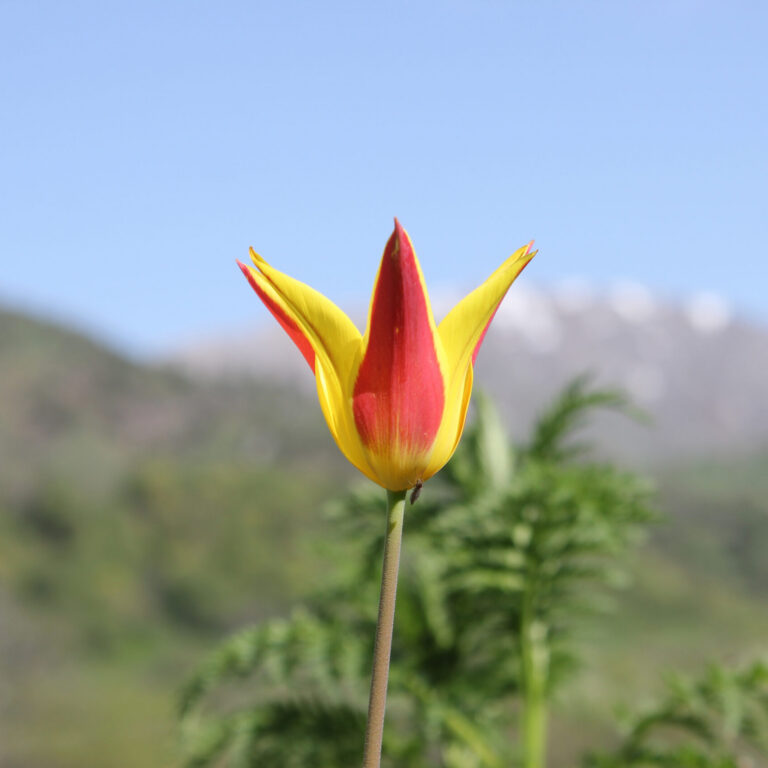
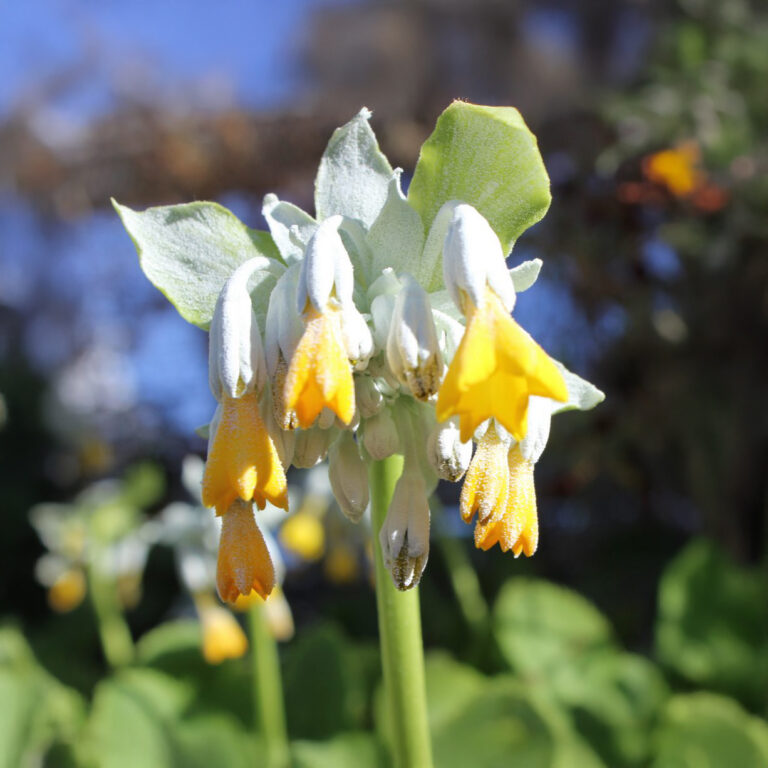
QUICK FACT: Only found in specific pockets of Kyrgyzstan.
THREATS: Collection by the people, livestock grazing, infrastructure development, climate change
IMPORTANCE: Sustains local insect pollinators and provides food for wild boars, deer and others
Photo credit: Brett Wilson
QUICK FACT: It is known only to a single location with just 10 mature trees.
THREATS: Rapid habitat loss, illegal seed collection (sometimes felling trees), slow growth, and tiny population size.
IMPORTANCE: Its seeds feed lemurs and birds in the Andasibe region.
Photo credit: William J. Baker
QUICK FACT: Famous for synchronized mass blooms about once every 12 years.
THREATS: Grasslands converted for tea/plantations and growing urban pressure in fragile montane habitats.
IMPORTANCE: An endemic shola-grassland understory plant supporting diverse pollinators.
QUICK FACT: The only Italian Primula in a non-mountain setting; also, Italy’s national park symbol.
THREATS: Tourism development, invasive species, plant collection, fire, and landslides on cliff habitats.
IMPORTANCE: Helps stabilize harsh coastal cliff ecosystems that host rare, relict plant communities.
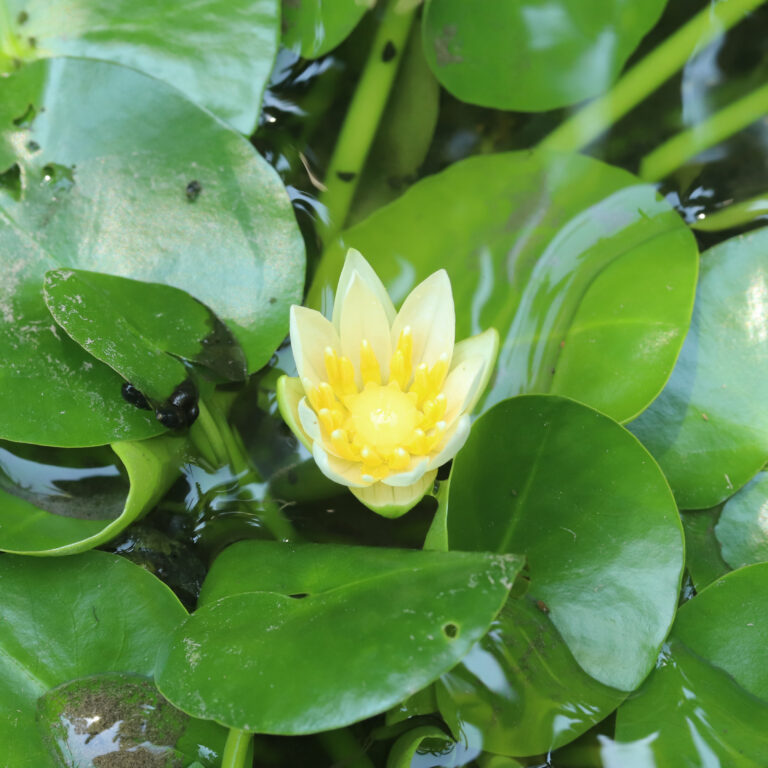
QUICK FACT: Declared extinct in the wild in 2010, rediscovered in 2023, it grows on mud.
THREATS: Mining, farm conversion, low awareness, and potential plant collection pressures.
IMPORTANCE: An irreplaceable local specialist, this Evolutionary Distinct and Globally Endangered (EDGE) species is confined to warm spring pools.
Photo credit: Thomas Abeli
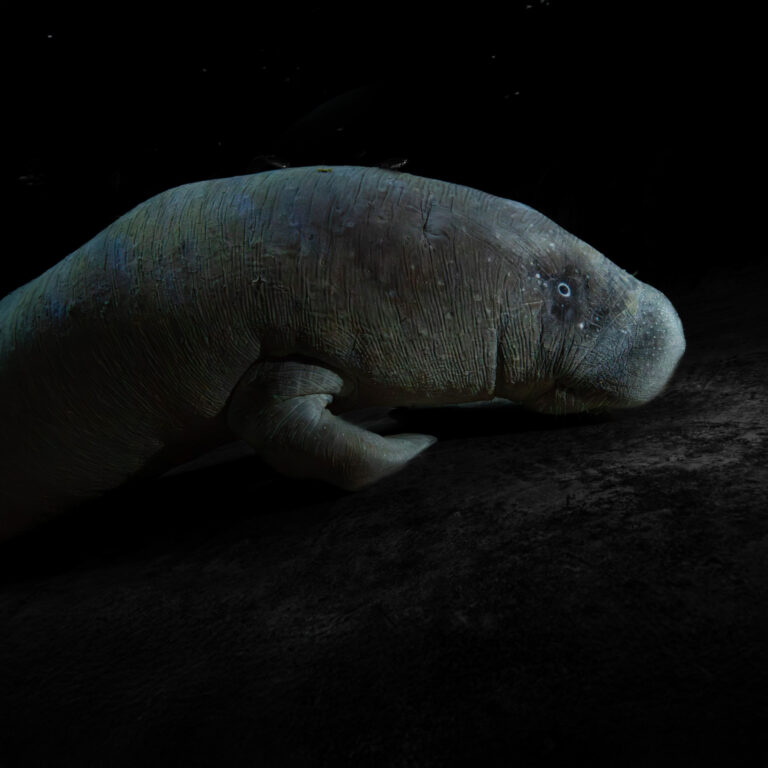
QUICK FACT: The only manatee known to regularly eat fish and mollusks.
THREATS: Poaching, traps/bycatch, and dam entrapment threaten populations across a huge range.
IMPORTANCE: Aquatic “gardeners” that stimulate plant growth and signal healthy, vegetated waterways.
Photo credit: Abu Dhabi Aquarium
QUICK FACT: On current trends, it could be extinct in the wild by 2035.
THREATS: Food scarcity, oiling, noise, predation, disease, and extreme weather made worse by climate change.
IMPORTANCE: Transfers ocean nutrients to colonies, shaping nearby coastal ecosystems and food webs.
Photo credit: Bernard Dupont
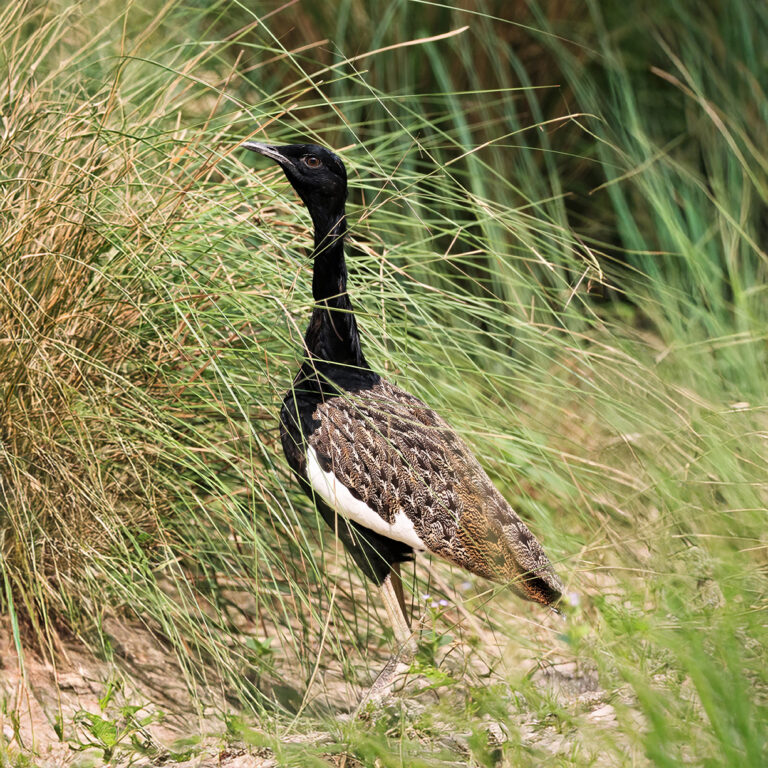
QUICK FACT: Males perform an explosive aerial courtship dance.
THREATS: Grassland conversion, overgrazing, altered burning/cutting, flooding, invasives, and powerlines.
IMPORTANCE: A grassland health indicator and flagship that drives protection and sustainable land use.
Photo credit: Kees Groot/ACCB
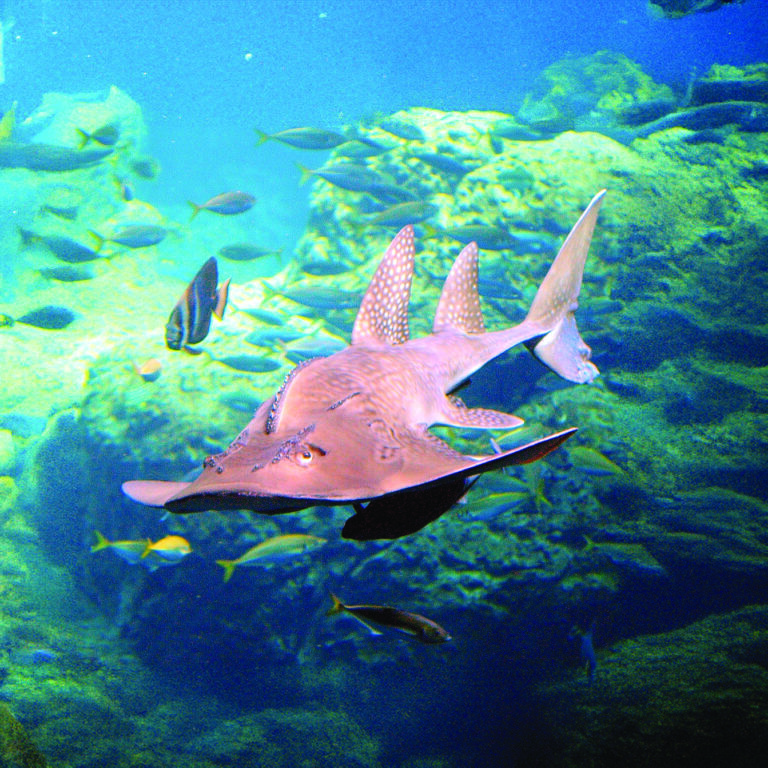
QUICK FACT: Known as the “Shark Ray” because it looks like a cross between a shark and a ray.
THREATS: Intense, unregulated fishing pressure: captured in industrial, artisanal, and subsistence fisheries via hook and line, gillnets, trawling, and more.
IMPORTANCE: A large bottom predator that regulates prey and stirs sediments while feeding.
Photo credit: OpenCage
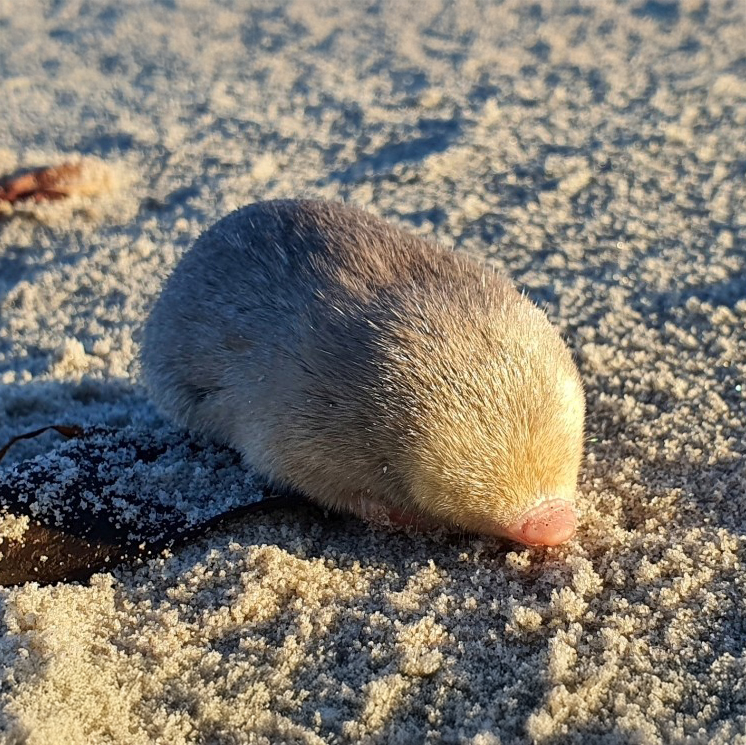
QUICK FACT:
THREATS: Mining and coastal development fragment and destroy sensitive dune habitats.
IMPORTANCE: Regulates soil invertebrates and improves soil aeration and water flow through burrowing.
Photo credit: JP LeRoux
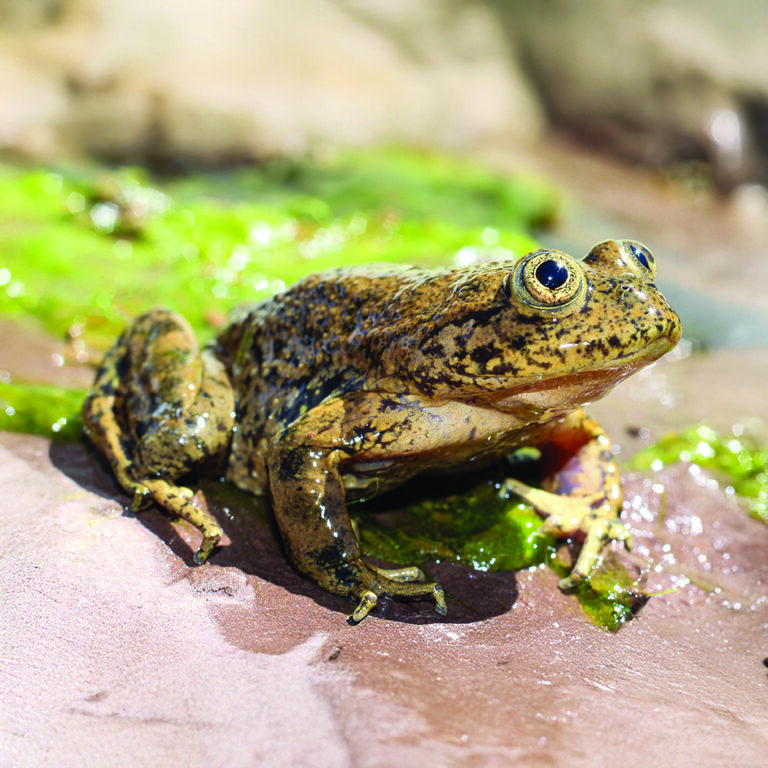
QUICK FACT: Starts life as a huge tadpole, up to about half a pound. This species belongs to the third most threatened genus of frogs in the world!
THREATS: Stream water extraction, pollution, collection for medicine, and possible chytrid disease impacts.
IMPORTANCE: A strong water-quality indicator and an essential prey link in high-altitude food chains.
Photo credit: Gabriel Callapa
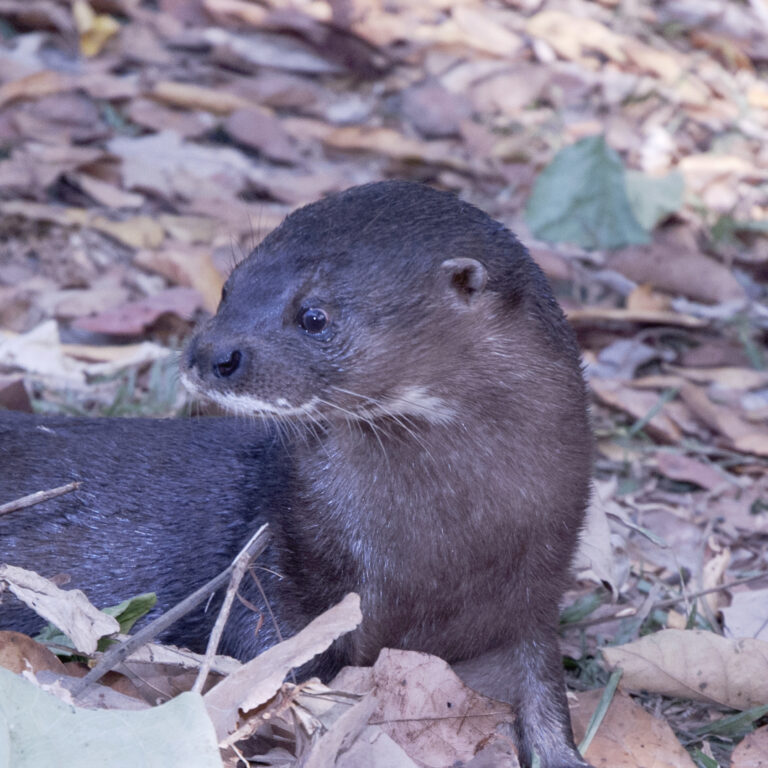
QUICK FACT: Rediscovered in 2010 after it had not been seen for more than a century.
THREATS: Illegal trade, habitat loss from plantations, and altered river flows from dam construction.
IMPORTANCE: A top freshwater predator regulating prey populations and stabilizing aquatic communities.
Photo credit: Nicole Duplaix
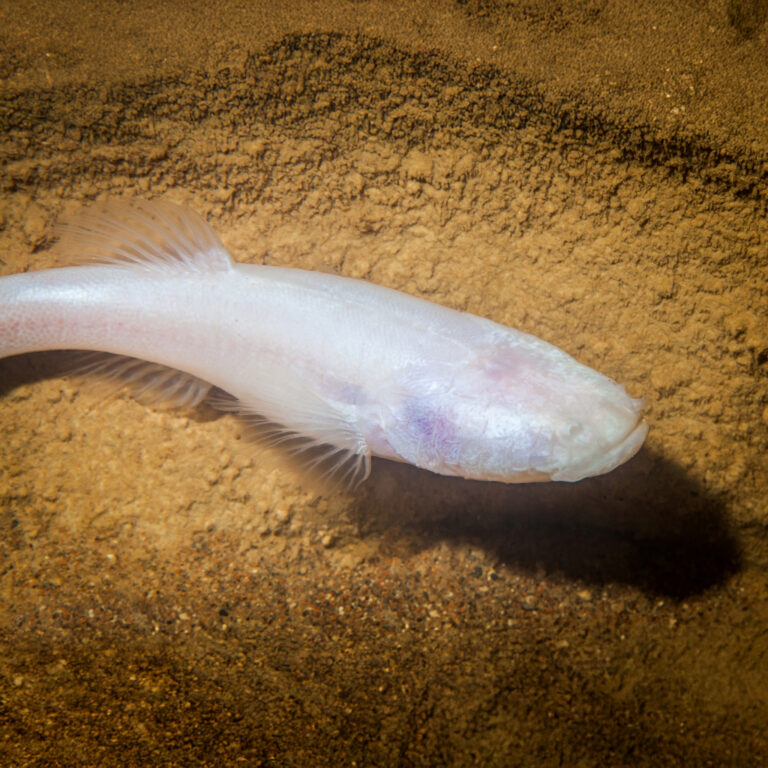
QUICK FACT: It’s common and scientific name is a nod not just to Indiana residents, but also to IU basketball.
THREATS: Groundwater pollution; sedimentation related to agriculture; quarrying
IMPORTANCE: Vital contributors to subterranean ecosystems, helping to break down organic matter and recycle nutrients.
Photo credit: Eric C. Maxwell
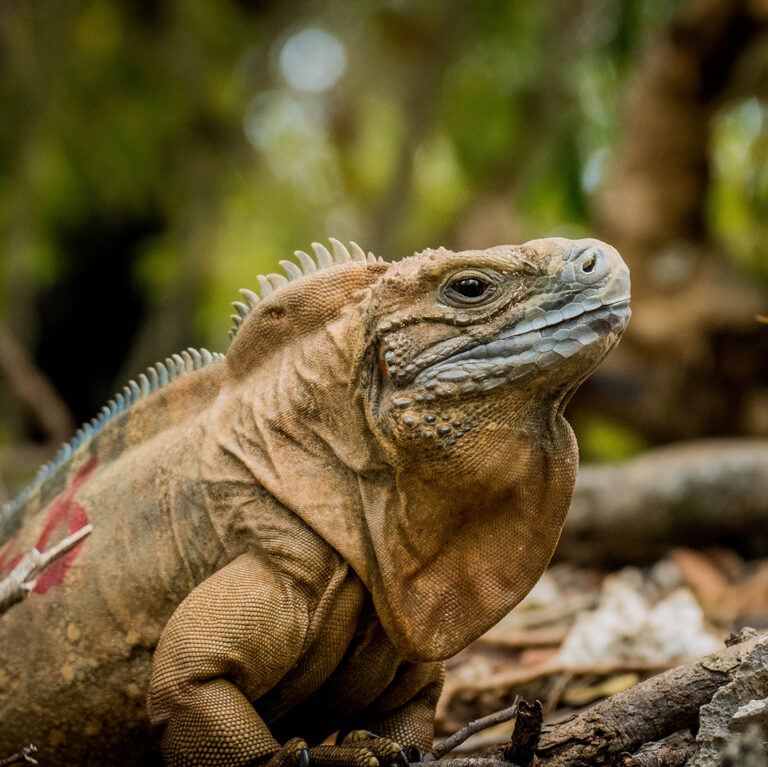
QUICK FACT: As Jamaica’s largest native land vertebrate, these iguanas are modern day dinosaurs with bright blue scales running down the spine of their backs.
THREATS: Invasive predators and ecosystem disruption.
IMPORTANCE: A major seed disperser that boosts dry-forest plant germination; a flagship for conservation.
Photo credit: Joey Markx
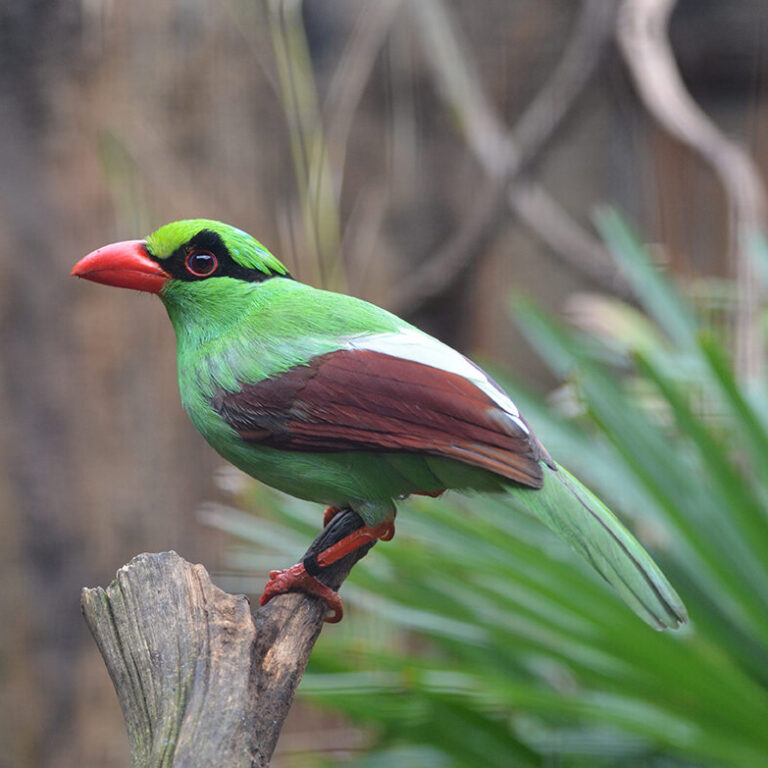
QUICK FACT: Locally called “Ekek-Geling,” echoing its distinctive call.
THREATS: Trapping for the cagebird trade and ongoing habitat loss.
IMPORTANCE: A predator that keeps invertebrate and small vertebrate populations in check.
Photo credit: Andrew Owen Chester Zoo
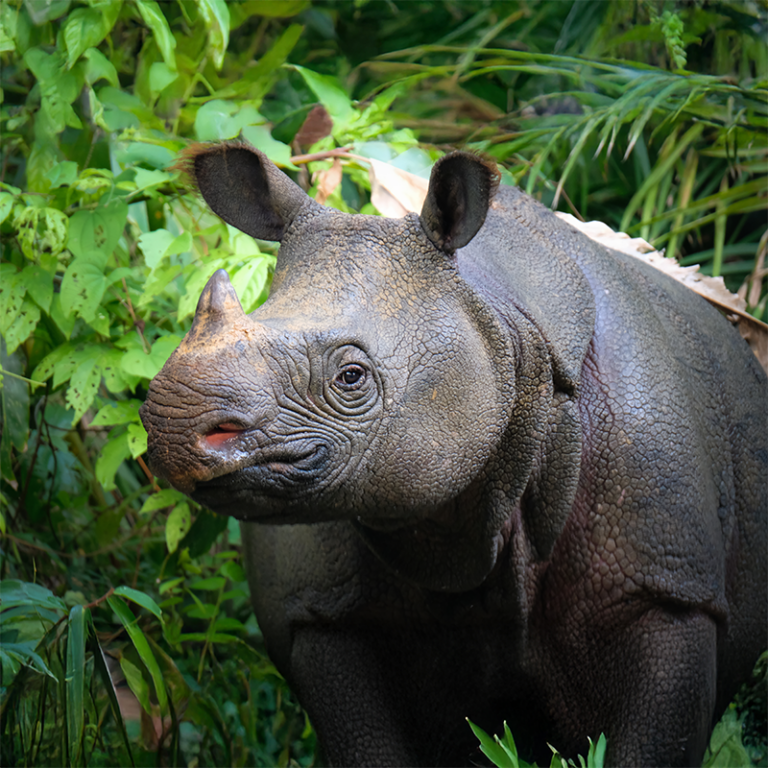
QUICK FACT: The most threatened of the world’s five rhino species.
THREATS: Poaching, disease risk, and tsunami hazards in its single stronghold.
IMPORTANCE: A major ecosystem engineer shaping vegetation and habitat in its protected range.
Photo credit: Toby Nowlan
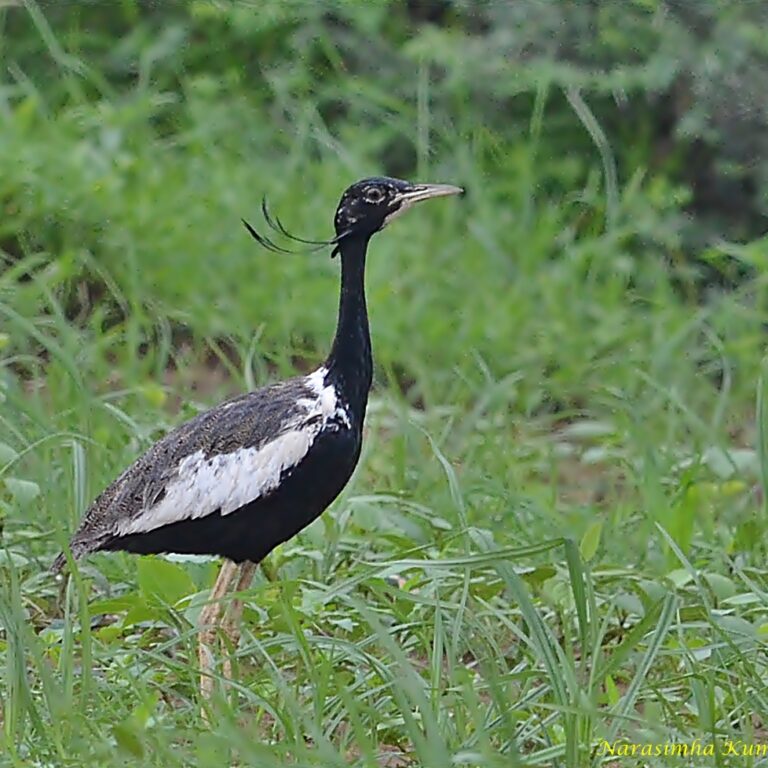
QUICK FACT: Known for its spectacular leaping courtship display, jumping 6 feet (2m) in the air, hundreds of times. (Do not attempt this at home)
THREATS: Habitat loss across grassland landscapes.
IMPORTANCE: A grassland indicator. Its decline signals ecosystem collapse.
Photo credit: Narasimha Kumar
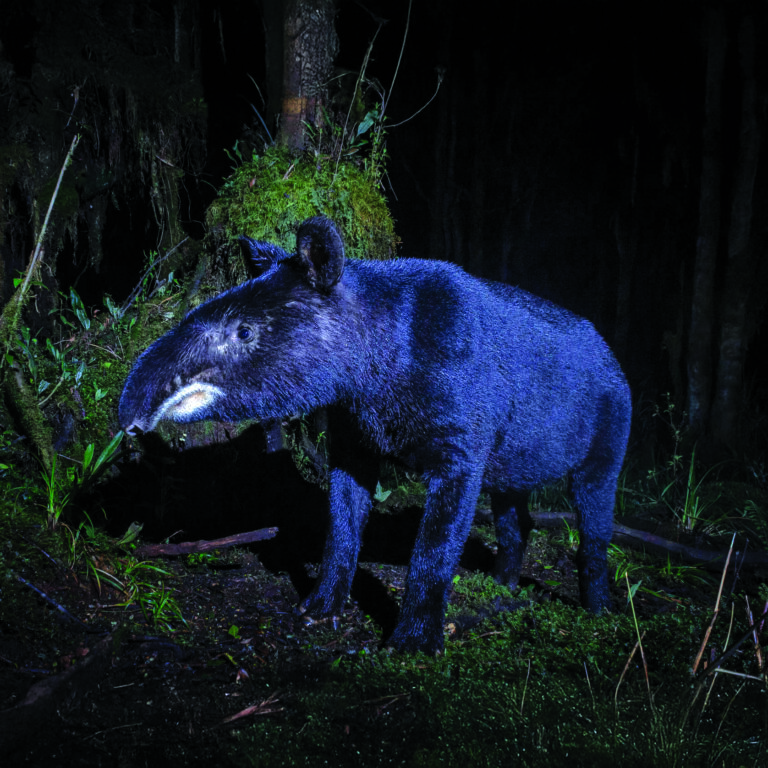
QUICK FACT: The smallest of the four tapir species and the only one adapted to cold, high-altitude Andes habitats.
THREATS: Dog attacks and deadly screwworm infections are causing alarming mortality in parts of its range.
IMPORTANCE: A “forest engineer” that disperses seeds and shapes Andean forest structure and diversity.
Photo credit: Camilo Botero
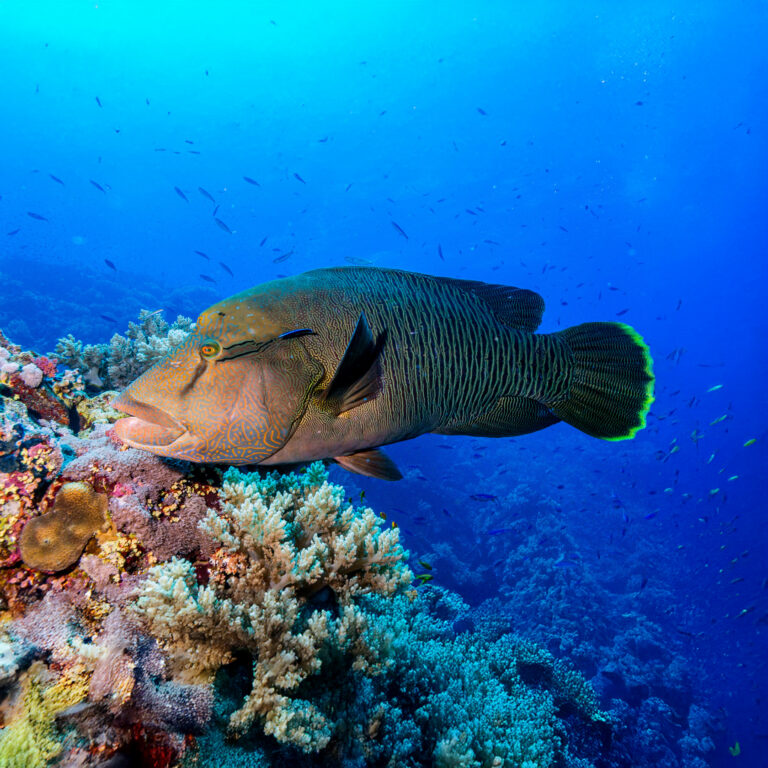
QUICK FACT: Can live 30+ years, exceed 1.5 m and changes sex; only the largest individuals can become males.
THREATS: Heavy fishing pressure and luxury seafood trade demand due to its high market value.
IMPORTANCE: One of the few predators of crown-of-thorns starfish, helping protect coral reefs.
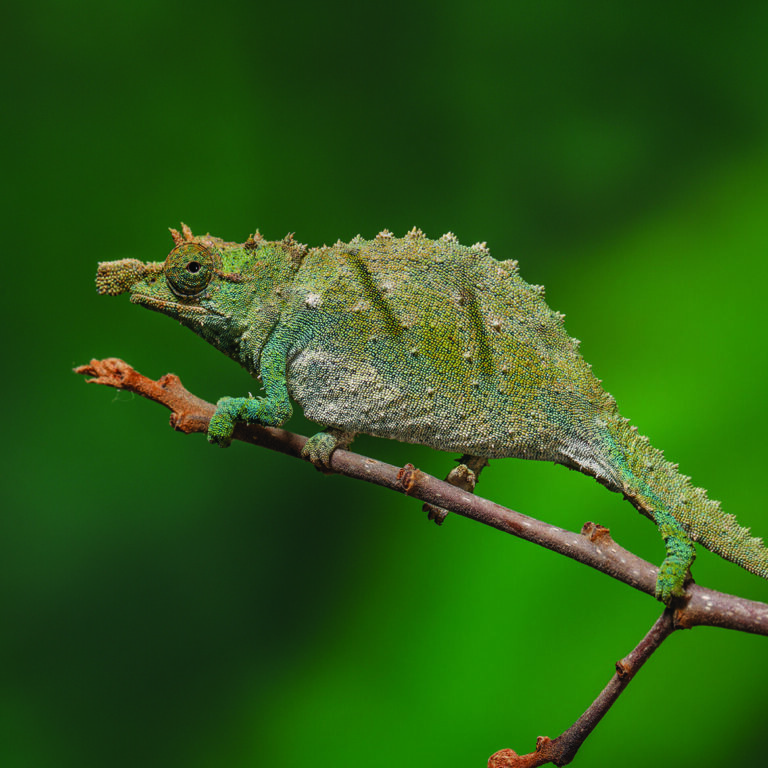
QUICK FACT: The species name “acuminatus ” means “to sharpen” in reference to the numerous sharp spines scattered across the head and body.
THREATS: Habitat understory clearing for cardamom and other shade plant cultivation, and illegal collection for the pet trade.
IMPORTANCE: This small (up to 82mm or 3.2” in length) arboreal insectivore is a local endemic known only from a single locality and represents one of the more elaborately ornamented and colored pygmy chameleons in the world!
Photo credit: Zoo Vienna
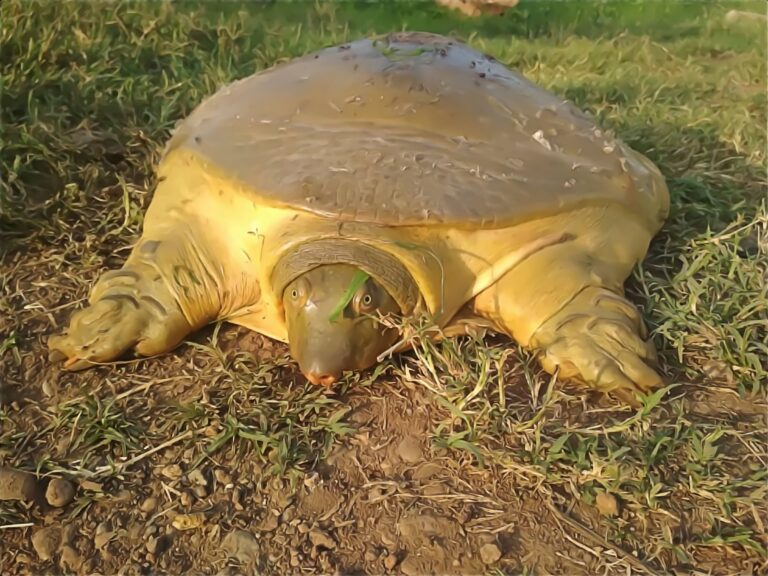
QUICK FACT: This species looks like a gigantic pancake that weighs over 50 kg and has a pig-like face, so, not your usual turtle!
THREATS: Harvesting by local fishermen, harvesting by human refugees escaping from regional conflicts.
IMPORTANCE: One of the larger predatory freshwater animals where it is still found.
Photo credit: Luca Luiselli
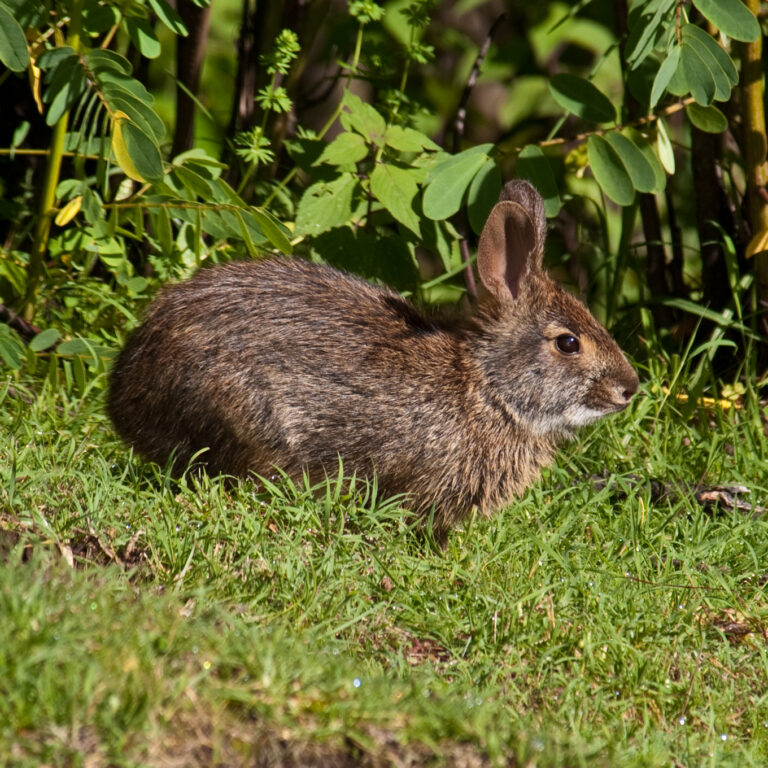
QUICK FACT: “Lost” for 120+ years, recently rediscovered via intensive camera-trapping.
THREATS: Subsistence hunting, fires, logging, and potential risk from rabbit hemorrhagic disease variant 2.
IMPORTANCE: Shapes plant communities through browsing and supports predators as an essential prey species.
Photo credit: Stephen John Davies
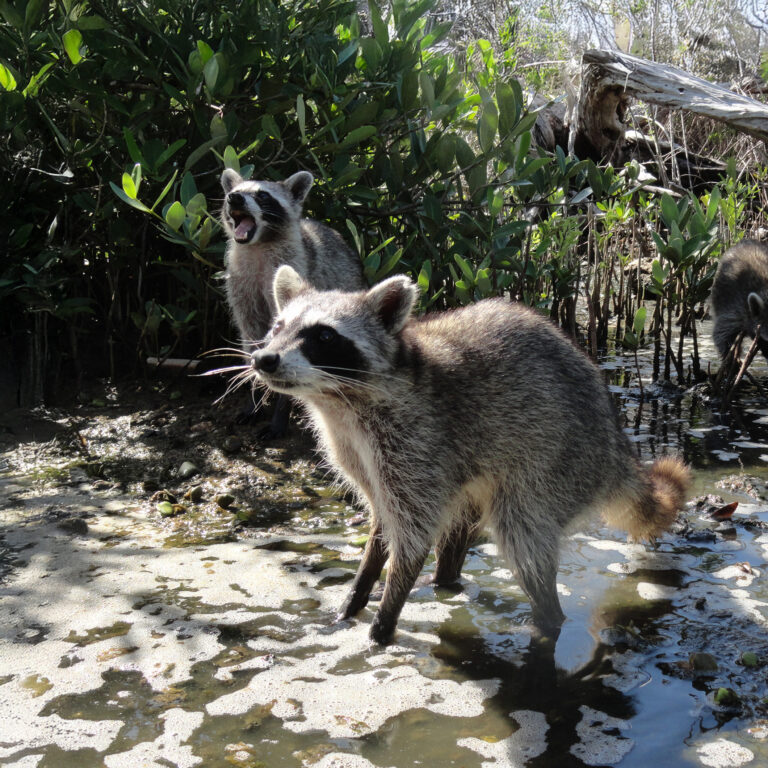
QUICK FACT: Eats tortilla chips discarded by humans, leading to health issues.
THREATS: Tourism and development on its very restricted island range.
IMPORTANCE: A mesocarnivore that helps regulate small animal populations.
Photo credit: David Valenzuela
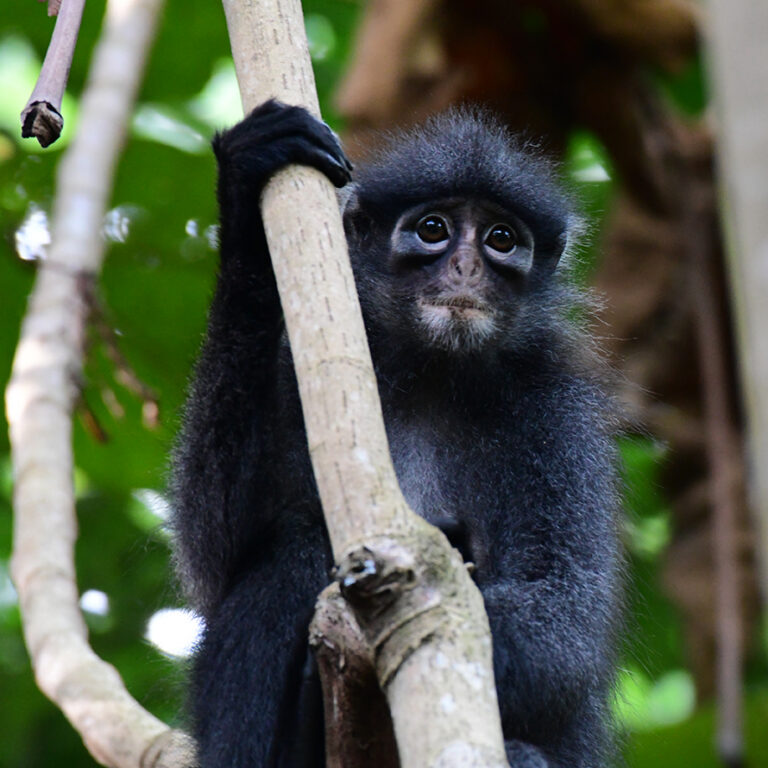
QUICK FACT: Babies are born white, then darken to the adults’ black coat as they mature.
THREATS: Forest clearance, fragmentation, road/wire deaths, and conflict in human areas; small genetic base.
IMPORTANCE: A seed disperser and seed predator that influences forest regeneration.
Photo credit: Andie Ang
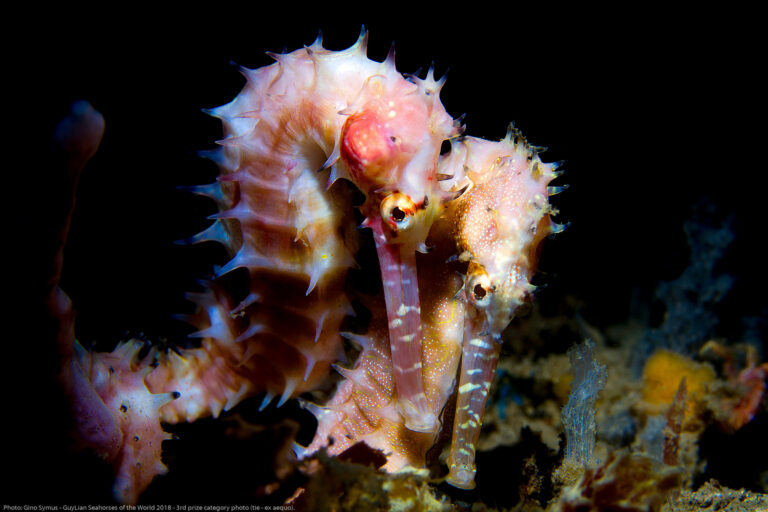
QUICK FACT: Superdads! It’s the male that gets pregnant and gives birth to the babies!
THREATS: Bottom trawling, habitat damage, and climate change are destroying seahorse habitats.
IMPORTANCE: A mid-level predator and sensitive habitat indicator for seagrass and reef ecosystems.
Photo credit: Gino Symus / SOTW
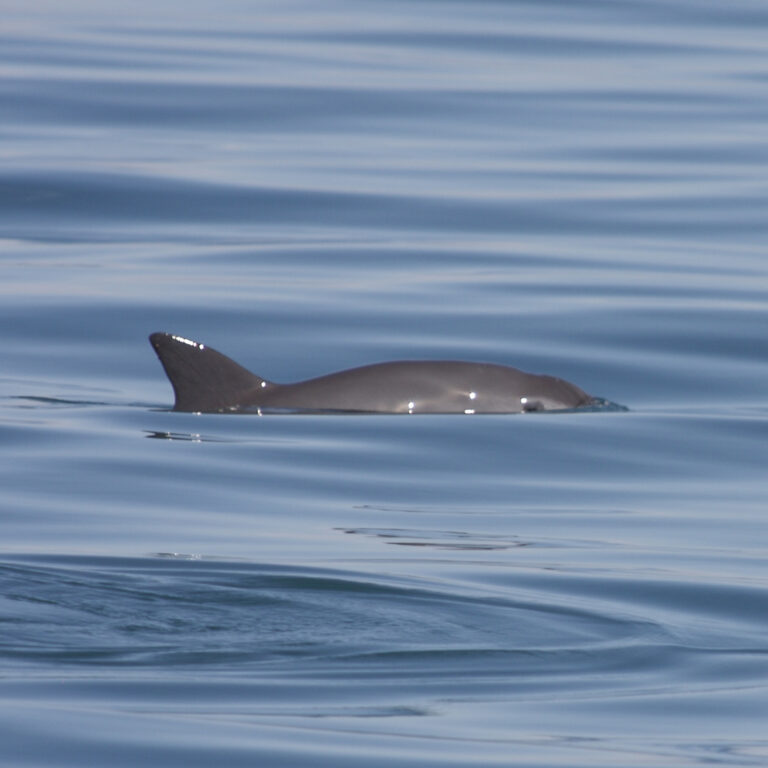
QUICK FACT: The “desert porpoise” has an over-sized dorsal fin to dissipate heat as it swims in the 90°F/32°C waters of the Gulf of California.
THREATS: Bycatch in fishing nets, especially gillnets, is the existential threat.
IMPORTANCE: Protecting the vaquita is urgent, as only a handful of individuals are thought to remain, and its extinction would be both imminent and preventable.
Photo credit: Thomas Jefferson
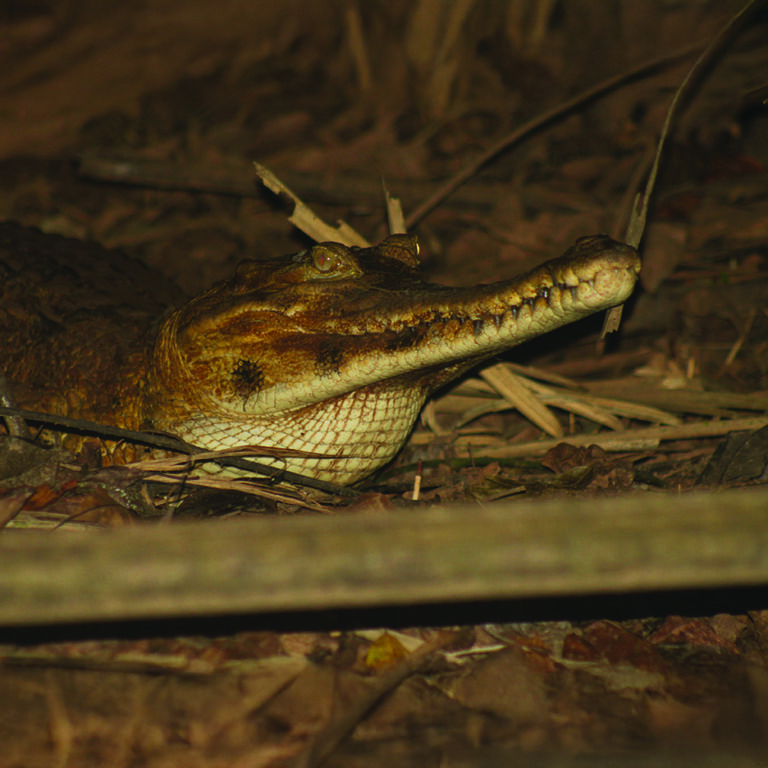
QUICK FACT: Remarkably vocal. Pairs have been recorded “duetting”, even swapping duet roles.
THREATS: Habitat loss, hunting, and accidental capture in unregulated gill-net fisheries.
IMPORTANCE: A keystone predator and ecosystem engineer that helps maintain aquatic system balance.
Photo credit: THRESCOAL
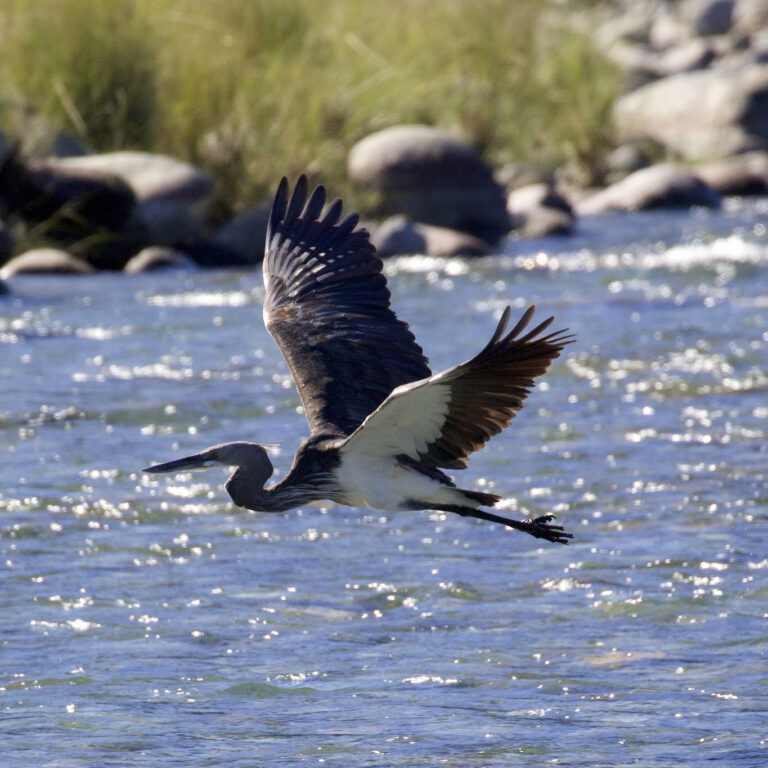
QUICK FACT: Dubious Guinness record as the world’s rarest heron.
THREATS: River habitat loss, hydropower impacts, mining, disturbance, climate change, and tiny range size.
IMPORTANCE: A top predator and sensitive river-health indicator in Himalayan freshwater systems.
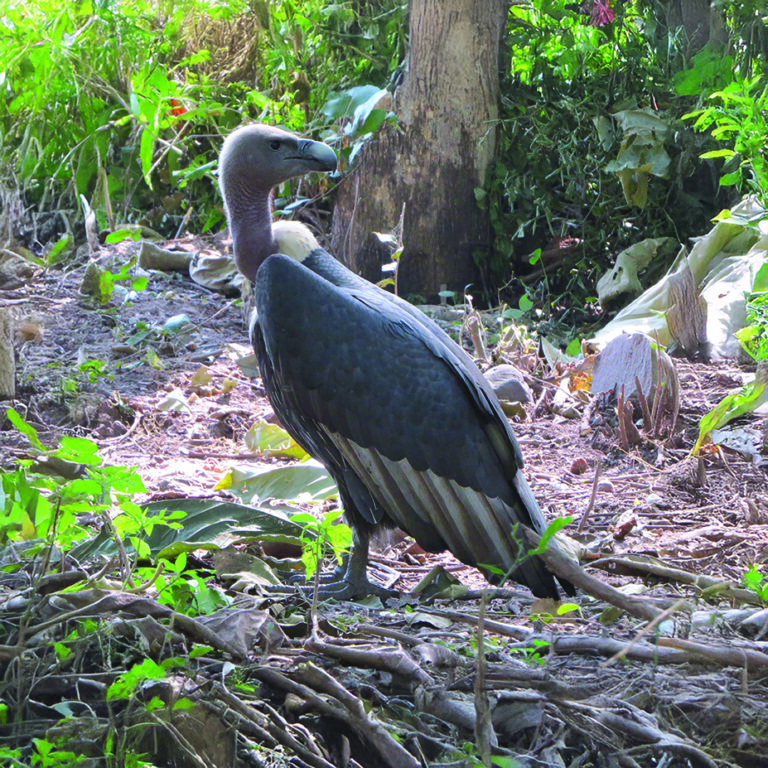
QUICK FACT: Once among the most common raptors; the population has plummeted to a few thousand in just two decades.
THREATS: Toxic veterinary NSAIDs, poison baits, and electrocution from power infrastructure.
IMPORTANCE: Nature’s cleanup crew. Loss led to more feral dogs, worsening rabies and health impacts.
Photo credit: Chris Bowden
QUICK FACT: This snake has a Banana-yellow color and is known for an accordion-shaped ambush posture.
THREATS: Boat strikes, pollution, and warming/ocean chemistry changes in its tiny Costa Rican range.
IMPORTANCE: Costa Rica’s only endemic marine reptile, an ecological role we may lose before we understand.
Photo credit: Brooke Besssesen
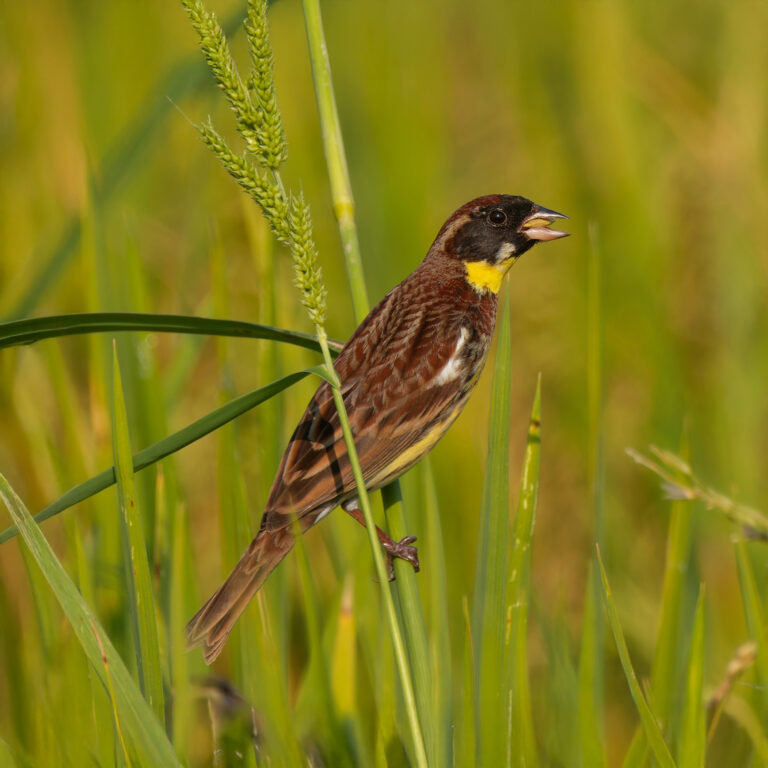
QUICK FACT: Agricultural expansion once helped it spread in the 1800s, then rapid decline followed.
THREATS: Illegal hunting and habitat destruction across its migratory range.
IMPORTANCE: A flagship open-habitat migrant, its sudden collapse in population mirrors the cautionary tale of passenger pigeons.
Photo credit: Ayuwat Jearwattanakanok